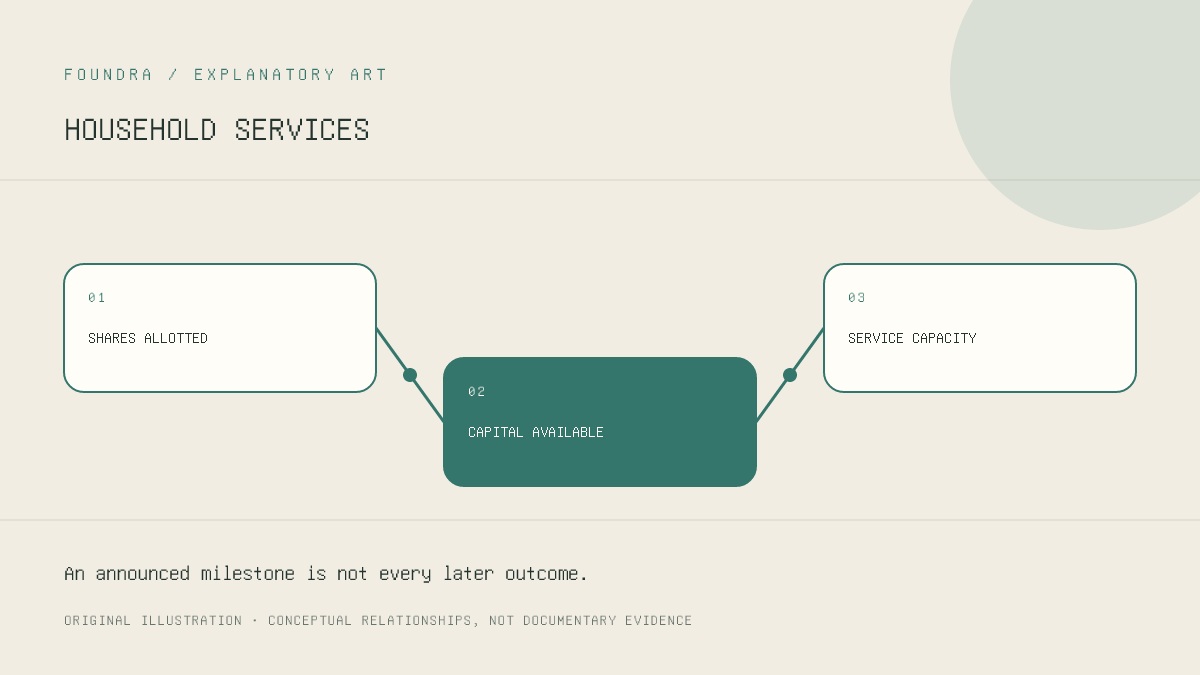
Investor demand for an issue and dependable service capacity are different kinds of evidence.
An allotment, not another listing
Urban Company’s latest financing is a public-market follow-on issue, not a new stock-market debut. YourStory’s account, published on November 20, says the home-services platform raised ₹2,500 crore through a qualified institutional placement. Inc42’s report on the same date describes the Fund Raise Committee approving the allotment of shares. Together, the reports support describing the financing as raised and allotted, rather than merely a board proposal. They do not make every proposed use of the money a completed operating investment. The issue closed on November 19, according to Inc42; this article is published with the current edition, not backdated to that close.
The reports identify an issue price of ₹156 per share, below the stated floor price of ₹161.03, and demand of about ₹15,000 crore. YourStory says shares were allotted to 33 investors after bids from more than 60. These are secondary accounts of the company’s exchange communication. Foundra has not independently inspected the exchange filing in this reporting package. We retain that source limitation rather than presenting the reports as a first-hand examination of a placement document. Neither bid demand nor the discount is a promise about subsequent returns to shareholders. YourStory also reports that 13 of the 33 allotted investors did not previously hold Urban Company shares.
Capital demand versus service capability
A QIP takes place in a market for capital. The service business has to operate in a different market: one in which customers want household work completed and professionals decide whether a platform offers worthwhile, workable jobs. The financing can provide resources for that second market, but it cannot substitute for the coordination involved. This is an analytical distinction, not a finding that Urban Company’s current service is deficient. It explains why an oversubscribed issue and a reliable service network should be evaluated with different evidence.
Inc42 describes ₹600 crore of planned spending on InstaHelp’s service-professional ecosystem, including minimum earnings guarantees, referrals, training and onboarding. The plan spans several financial years; it is not all expenditure already incurred. The broad point is more important than treating the allocation as a near-term revenue forecast. Paying to establish supply may help a network become available in more places or at more times. Whether it creates durable capacity depends on what happens after that initial support and on how workers and customers experience the service.
Consider two hypothetical uses of the same expansion budget. One could temporarily improve availability by paying more to attract professionals. Another could improve the onboarding process or make work scheduling clearer. Both might be useful, and the announced plan includes several kinds of expenditure. But they would leave different evidence behind. Temporary incentives should be assessed with their duration and conditions visible. Training should be assessed by whether it prepares professionals for the work expected of them. This comparison does not quantify Urban Company’s programme or claim to know its eventual effectiveness.
For a reader evaluating the business, the danger is to treat every expansion rupee as though it purchases an identical unit of growth. Household-service capacity is not simply an inventory item that can be ordered once and counted indefinitely. A useful later disclosure would distinguish the cost of launching supply, the cost of maintaining it and the revenue associated with completed work. That would help separate an expansion phase from a sustainable operating pattern. The current financing reports do not provide enough evidence to calculate that pattern or forecast profitability.
Do not collapse the financing and operating milestones
Institutional issue
Reports describe ₹2,500 crore raised through a qualified institutional placement.
Planned allocation
Expansion of the service ecosystem and other business investments remain uses of proceeds.
Operating evidence
Service reliability and sustained economics require later results, not issue demand alone.
What this financing settles—and what it leaves open
The QIP settles a narrower question: the company has obtained a substantial new pool of institutional capital, according to two contemporaneous reports. It does not settle the size of the eventual service market, the return on each planned allocation or the performance of businesses supported by the proceeds. Future results will need to speak for those claims. The strongest reading of the announcement is therefore neither a celebration of demand alone nor a dismissal of expansion spending. It is a financing milestone with a clearly visible operating task beside it: turning money available into useful capacity that customers and professionals continue to choose.
Sources
- Urban Company raises Rs 2,500 Cr through QIP | YourStory ↗ YourStory
- Urban Company Raises ₹2,500 Cr Via QIP, Draws Bids Worth Over ₹15,000 Cr ↗ Inc42
Have additional information? Request a correction.