A completed financing and a preclinical development plan must not be confused with proven therapeutic selectivity or an approved treatment.
What the financing actually establishes
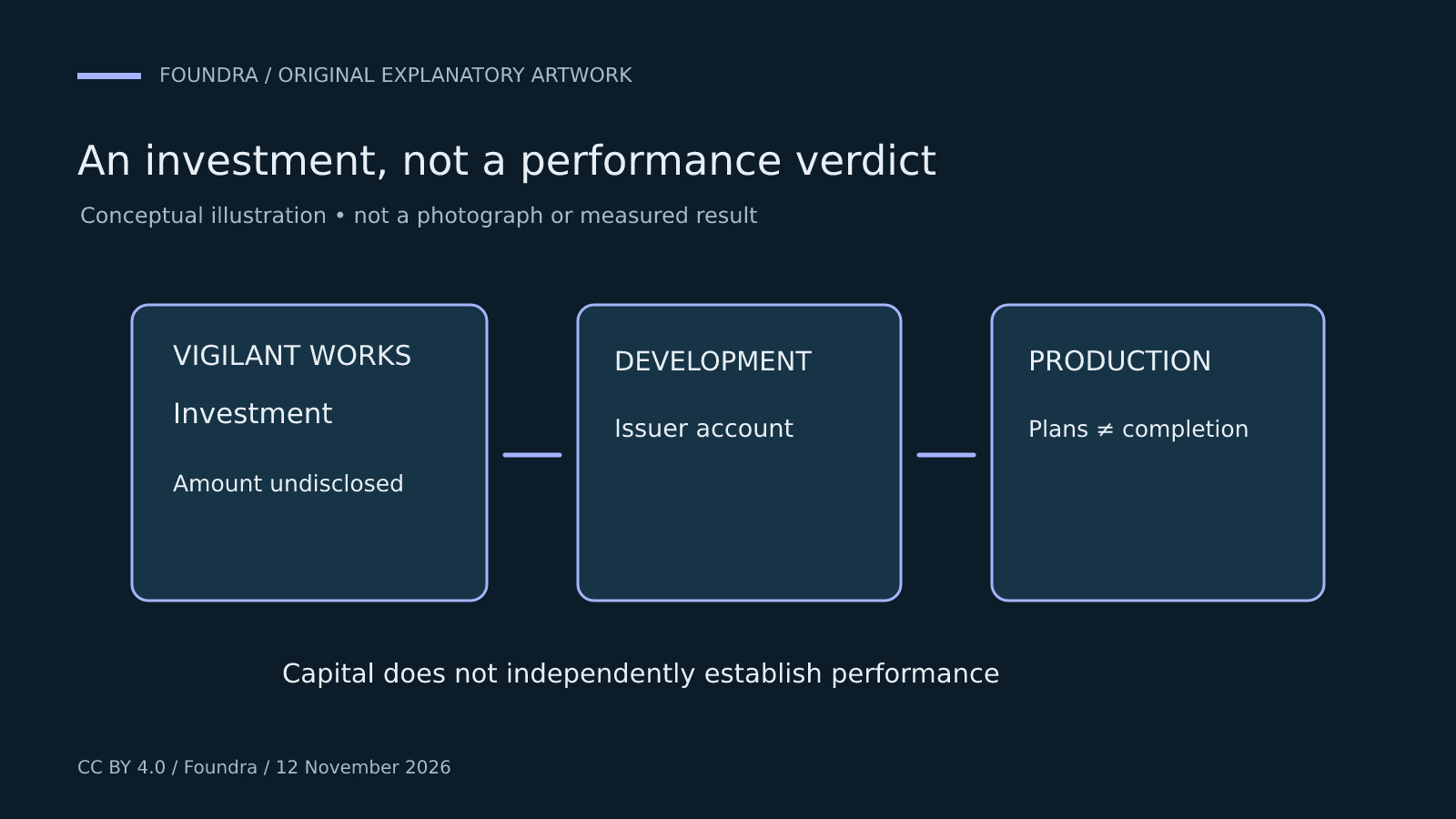
A biotechnology round can fund a scientific proposition without settling it. SRTD Biotech’s November 9 release says it completed an oversubscribed €31.5 million seed financing. Mérieux Equity Partners led the round, with NRW.BANK and Boehringer Ingelheim Venture Fund as co-leads; the company also names Lilly Ventures, HTGF and Anobis Asset as participants. The release describes completed financing, not a target amount the startup hopes to raise.
The intended use is preclinical development of targeted RNA therapies across oncology, autoimmune conditions and fibrosis toward an investigational new drug milestone. That is a development plan. It does not establish that SRTD has begun a human trial, received authorization to market a medicine or demonstrated a clinical benefit. Keeping those stages separate is essential to understanding what the investors have financed and what remains to be shown.
SRTD describes its approach as selectively expressed RNA, using intracellular disease markers to activate expression in target cells. It also describes delivery and synthetic-biology capabilities within its platform. Those statements identify the company’s technological thesis. They should not be converted into the stronger assertion that its therapies already work exclusively in diseased cells, avoid healthy tissue in patients or outperform a competing treatment. The announcement does not provide the evidence needed for those conclusions.
Two questions hidden inside one promise
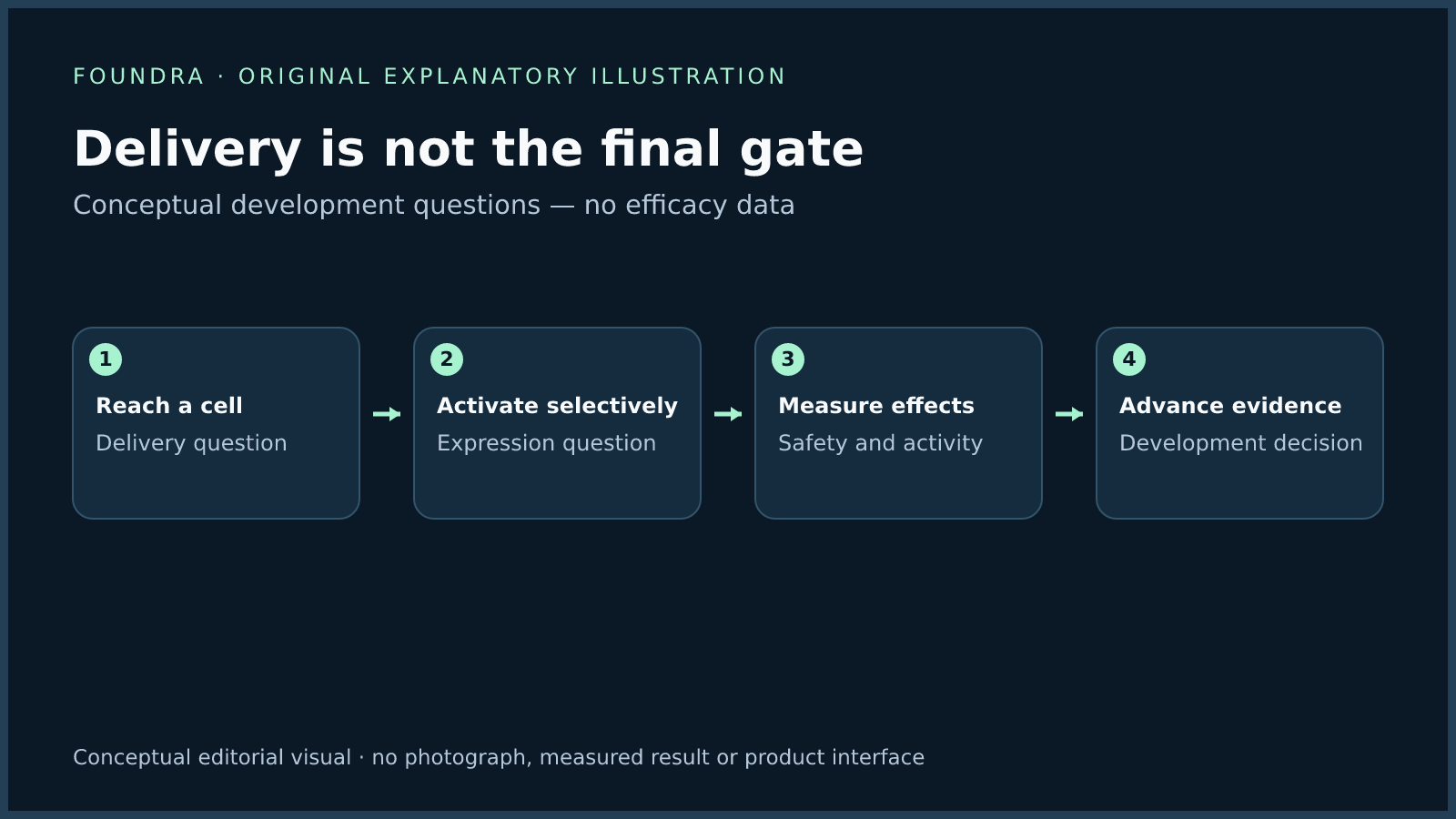
The following explanation is an analytical way to examine the thesis, not a report of SRTD’s experimental results. First ask whether a therapeutic construct reaches the intended location. Then ask whether it becomes active in the intended cells under the intended conditions. These questions can be related without being identical. A delivery result alone does not establish selective activity, and a selective mechanism demonstrated in one setting does not establish that it works across every intended indication.
Consider a hypothetical comparison involving a target-cell preparation and a healthy-cell preparation. A meaningful evaluation would need to define the preparations, the dose, the conditions and the measured outcome. Without those details, a statement about selectivity leaves the reader unable to judge its scope. This is why the attractive idea of an intracellular switch should be treated as a research proposition whose usefulness depends on the evidence around it—not as a self-validating description.
There is also a distinction between the platform and an individual candidate. A company may aim to apply a design method across several diseases, but each program still presents its own questions about markers, delivery, activity and tolerability. An investor’s support for the platform does not mean every future candidate will succeed. Nor does a setback in one illustrative program necessarily invalidate every possible application. The financing release does not offer program-level results sufficient to resolve that broader debate.
Delivery is not the final gate — editorial conceptual explanation
Reach a cell
Delivery question
Activate selectively
Expression question
Measure effects
Safety and activity
Advance evidence
Development decision
The milestone that should follow the money
For a reader following the company, the next useful updates would identify particular development steps and what evidence supports them. A candidate nomination, a preclinical result and permission to begin a trial are different announcements. They should carry different language. The precise milestone matters more than whether an update uses terms such as breakthrough or precision, which cannot substitute for information about what was measured and under which conditions.
A development budget is not disclosed
This is also a financing question. A seed round provides resources for a specified phase, but the announcement does not establish how long the cash will last or how much capital later stages will require. Foundra does not infer a runway from the round size. A hypothetical development budget would have to account for the selected programs, their experiments and the work needed before any proposed clinical step. None of that can be reconstructed reliably from the headline amount alone.
SRTD has announced a completed financing around a clearly stated scientific aim: controlling therapeutic RNA expression more selectively. That makes the round a substantive early-stage biotech development. The boundary is equally clear. Capital is now available according to the issuer, while the therapeutic proposition remains a matter for development and testing. The story moves forward when the next piece of evidence changes that boundary, not when the ambition is repeated more confidently.
Sources
- SRTD Biotech — seed financing announcement ↗ SRTD Biotech — seed financing announcement · 2026-11-09 · Primary source
- HTGF — SRTD financing announcement ↗ HTGF — SRTD financing announcement · 2026-11-09 · Primary source
Have additional information? Request a correction.