A private valuation and a lean reported headcount do not establish data quality, customer investment returns or unrestricted rights to use financial information.
The financing number
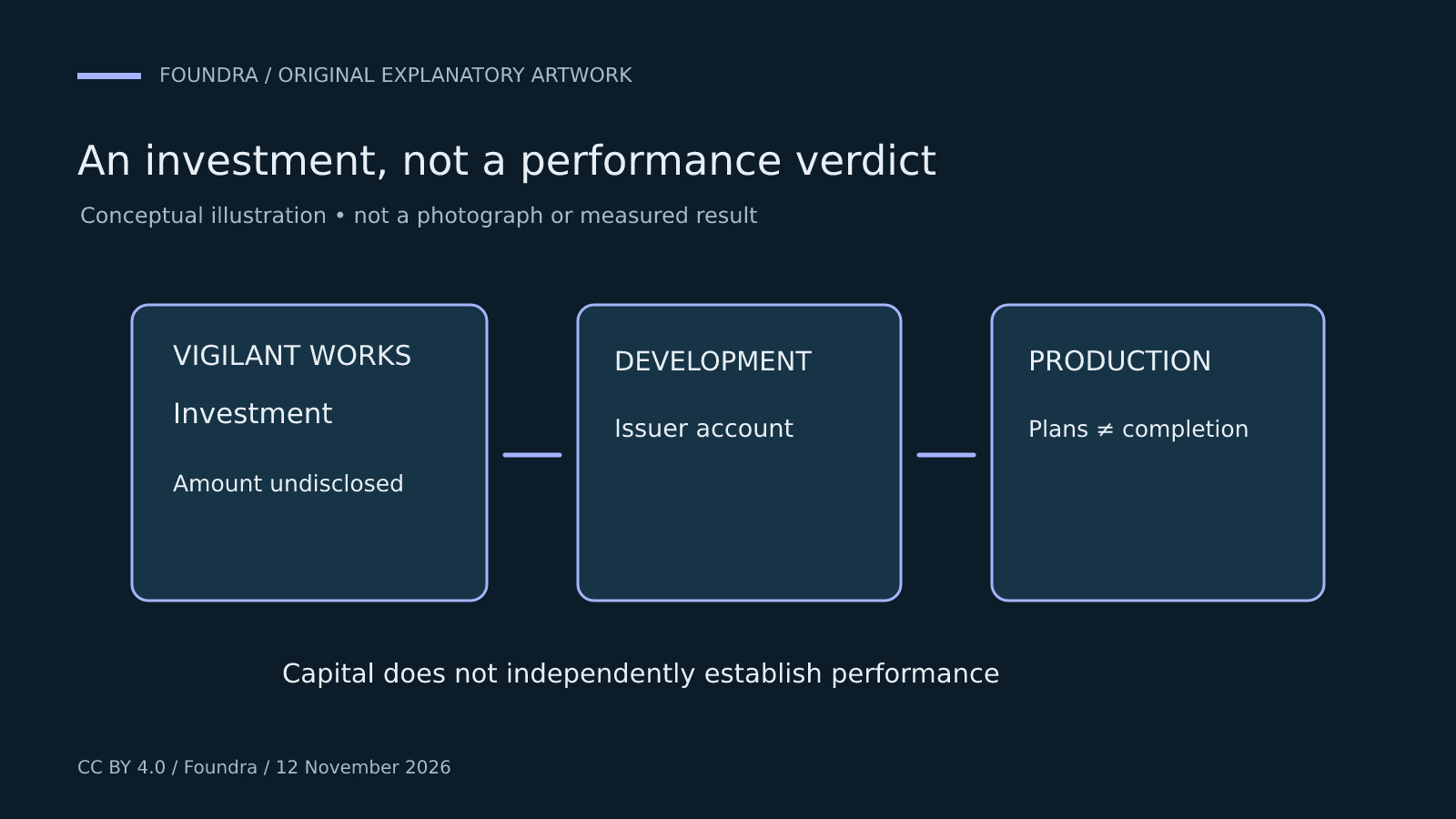
Databento announced a $100 million Series C on November 12 at a $1.1 billion valuation. Fifth Down Capital led the round, with investors including NEA, DRW Venture Capital, Tribe Capital and Hedosophia participating. The release also identifies a strategic investment from Fitch Ventures.
The $100 million is financing; the $1.1 billion is the disclosed private valuation. Neither is a stock-market capitalisation or a measure of customer returns. Databento says the new round follows a $97 million Series B earlier in the year, but this article does not combine those two rounds into an inferred lifetime funding total.
The company describes its business as a market-data platform serving financial firms. That makes this an infrastructure financing story: investors are backing the supply of information used in workflows, rather than announcing a new investment product for the public. The usefulness of that information remains a separate question from the valuation of its supplier.
The operating numbers
Databento reports more than doubling revenue since the previous round while remaining profitable. It also says it had 39 employees at the Series C close. These are company-reported figures; the supplied release does not include the financial statements needed for an independent verification of revenue or profit.
Headcount makes the issuer’s account of the business more specific, but it should not be stretched into a productivity comparison. An employee count does not identify all outside services, infrastructure costs or the scope of each person’s work. Nor does it establish that another market-data business should be able to operate with the same staffing.
The figures describe different dimensions of scale. Valuation records the terms attached to a financing event. Revenue concerns the business’s sales. Profitability concerns its economics, and headcount concerns one part of its organisation. Keeping them distinct prevents a compact announcement from becoming an unsupported claim that every dimension has been independently demonstrated.
This is not a rejection of the company’s account. It is a way to use attributed operating disclosures without turning them into an audited comparative scorecard.
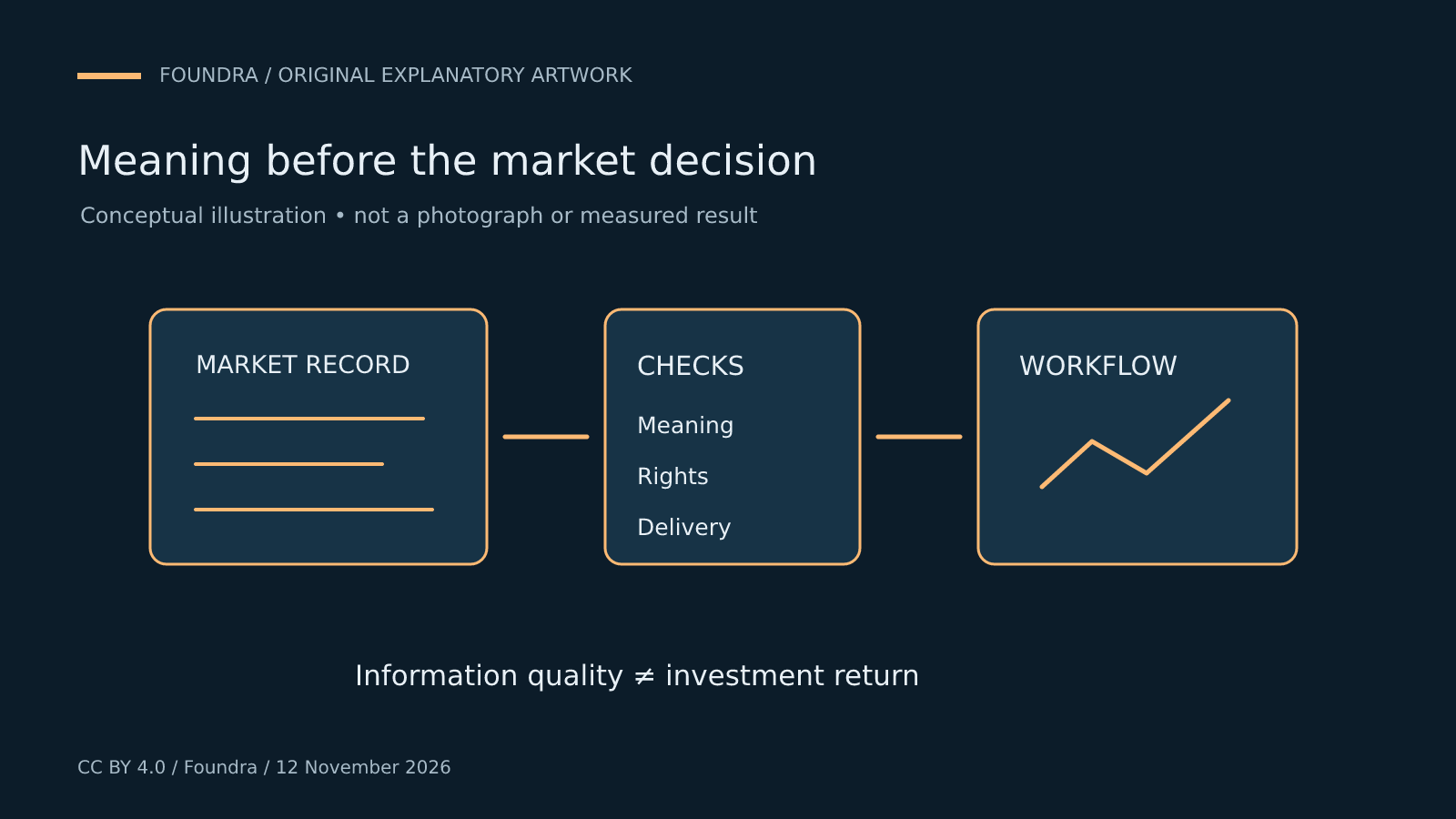
Three checks before data becomes a decision
Meaning
Understand coverage, event definitions and timestamps.
Permission
Confirm rights for the intended use and redistribution.
Delivery
Validate how records enter and remain usable in a workflow.
The customer claim
The release names quantitative trading firms, brokerages, asset managers, commodities firms and digital-asset companies as customer categories. It also says Databento has signed enterprise contracts with five of what it calls the six leading frontier AI labs. That latter statement does not name the counterparties or define the complete comparison set.
The AI claim is therefore reported as the issuer’s description, not as a verified ranking or a claim that a particular assistant’s financial capabilities depend on Databento. A contract does not reveal the dataset, permitted purpose or resulting model behaviour. Those details cannot be reconstructed from the financing announcement.
For readers following financial infrastructure, the claim explains why Databento presents its market beyond traditional trading and investment clients. It does not change the need to understand what the data means, which rights accompany it and how it reaches the consuming application.
The product questions are not financing numbers
A market-data record has definitions and a time context. Access through an interface does not eliminate the need to understand coverage, event types, timestamps and corrections. Similarly, permission for one use does not automatically establish rights for redistribution or model training. These are general distinctions relevant to the product category, not shortcomings found in Databento.
The announcement provides no basis for quantifying a customer’s investment advantage, claiming unrestricted data rights or comparing service reliability across providers. Its direct evidence concerns the new financing and the company’s attributed description of its business.
That leaves a clear factual snapshot: $100 million in new Series C capital, a $1.1 billion private valuation and a set of issuer-reported operating and customer statements. Each is informative when kept in its own lane. None should quietly stand in for all the others.
Sources
- Databento — original Series C announcement via PR Newswire ↗ Databento — original Series C announcement via PR Newswire · Primary source
Have additional information? Request a correction.