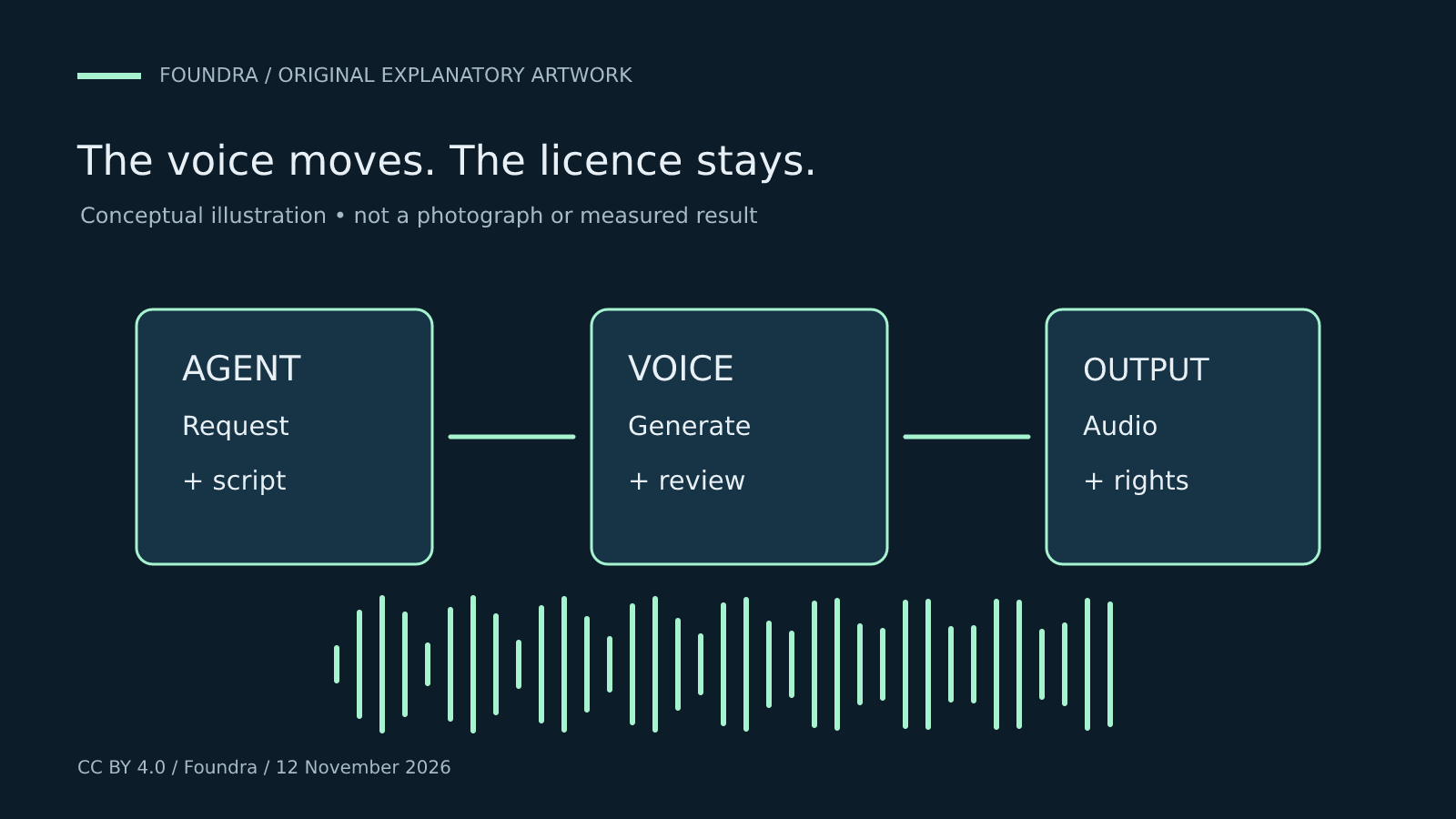
Tool integration can change where voiceover is made. It does not remove review, commercial-use permissions or responsibility for the final audio.
The studio becomes a service
A voiceover does not have to begin inside a dedicated editing application. That is the workflow change behind WellSaid Producer, launched on November 10: the company is exposing production capabilities through its Model Context Protocol server so that customers can use them within assistants and other agent-driven tools.
WellSaid’s primary announcement describes use through Claude, Copilot, ChatGPT or other agentic harnesses. It presents Producer as a headless, composable version of professional voice production, combining native 48kHz audio generation with commercially licensed AI voices based on paid voice actors. These are the company’s product and licensing descriptions, not the results of a newsroom audio test.
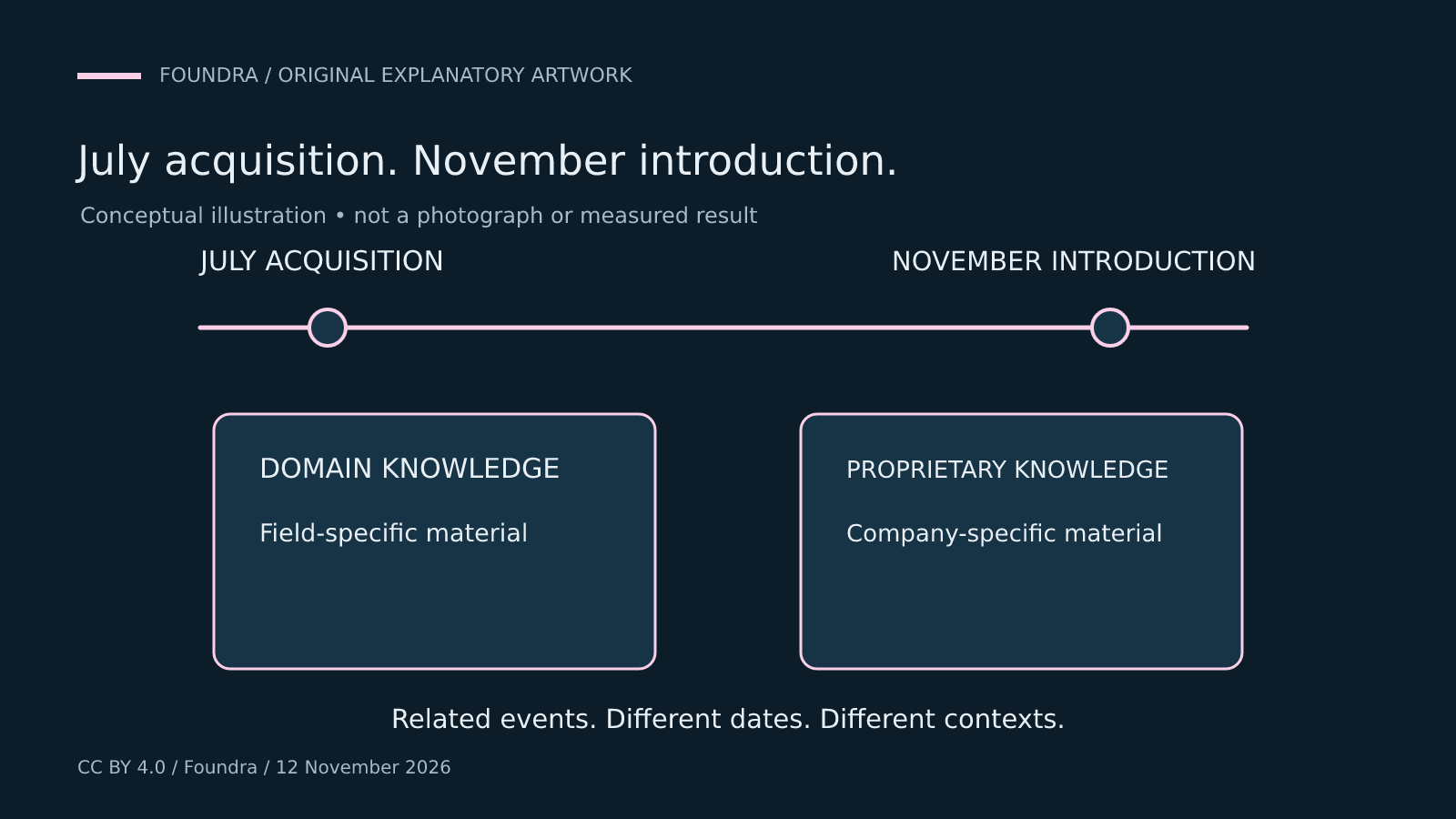
The original event predates the later GeekWire coverage retained in this run. November 10 is the launch date used here; November 12 is the date of this edition’s publication. A newly discovered report should not make an older product launch appear to have happened today.
What changes is the place where a production request can be initiated. The company’s service can become part of a larger workflow rather than the application where every step occurs. That proposition has implications for review and records as well as convenience.
A tool call is not a finished production
Consider a hypothetical training team assembling narration alongside a script and presentation. An assistant might request an audio version, collect revisions and place the result with the other materials. This is an explanatory scenario, not a customer workflow observed by Foundra or a verified account of a specific Producer integration.
The benefit would depend on the steps around generation. Someone must know which script is authoritative, whether names and numbers are spoken correctly, which version was approved and where the finished file is used. Moving the request into an agent does not make those decisions disappear.
An MCP connection is therefore best understood as an integration mechanism, not proof of professional quality. A production team would still have to test the voice, the directions it can express and the reliability of the surrounding tools. The announcement’s audio sample-rate specification does not, by itself, establish superior narration, intelligibility or editing outcomes.
WellSaid says customers are building custom production workflows through assistants and orchestration tools. That statement explains the intended market, but the supplied packet does not support measuring how much time those customers save. This article does not repeat a productivity percentage or claim that the new workflow replaces human review.
The interface changes; the production duties remain
Request
An assistant or tool calls the voice service through MCP.
Review
Check the script, delivery and approved version.
Reuse
Keep the relevant licence and production record with the output.
Permission has to travel with the file
Licensing is unusually prominent in the release. WellSaid says its voices derive from paid actors and that commercial licensing remains attached to the final audio regardless of whether work takes place in its own interface, an assistant or a custom-built tool. That is a vendor representation of its model, not a substitute for checking the terms applicable to a particular customer and project.
A buyer’s practical question is whether the production record remains understandable after the file leaves the generation service. Which voice was used, what permissions applied and what material was approved? A workflow that distributes audio widely needs those answers even when the original operator never opened the vendor’s studio.
That concern should not be confused with alleging that WellSaid’s permissions are deficient. We have not audited its actor agreements or customer contracts. The point is that a claim of licensed output is meaningful at the level of an actual permitted use, not merely as an adjective attached to an AI product.
The company is positioning an established production capability for a world of interconnected tools. The resulting competition is not only about how natural an isolated clip sounds. It is also about how easily an organisation can direct, approve, reuse and account for the audio it produces. Those dimensions require evidence from the workflow rather than the launch announcement alone.
Producer’s launch is verified, and its intended direction is clear. The durable test is whether changing the interface preserves the things a professional team cannot afford to lose: a usable result, an accountable review and permission that still makes sense when the final file reaches its audience.
Sources
- WellSaid — original Producer launch via PR Newswire ↗ WellSaid — original Producer launch via PR Newswire · Primary source
- GeekWire ↗ GeekWire
Have additional information? Request a correction.