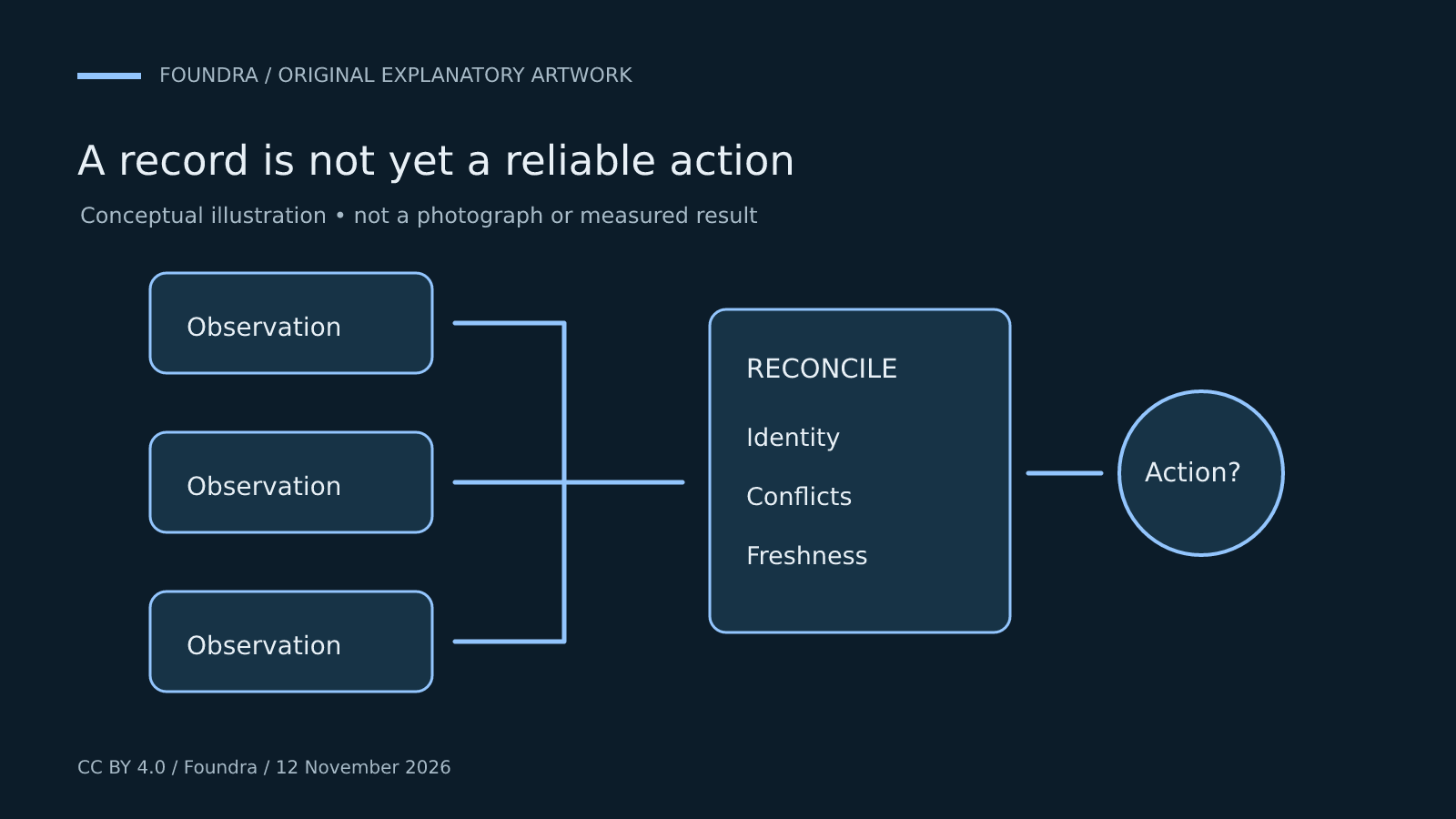
Discovering an asset is not the same as establishing a current, reliable configuration record that an automated workflow can safely use.
Collection without replacing every tool
Xurrent launched Xurrent ITAM on November 12, bringing native Agentless Discovery into its service-management platform. The company says the product also consolidates information from existing discovery tools, rather than requiring customers to replace them all.
Its optional discovery capability is described as scanning endpoints, servers and network devices through WMI, SSH and SNMP without installing software agents on each device. This is the collection method stated in the release, not a finding from a deployment assessed by this newsroom.
The launch joins asset information more closely to service management. Xurrent’s stated rationale is the condition of the configuration management database, or CMDB: the record used in IT operations to understand assets and related information.
Reconciliation is a separate capability
The release describes reconciliation rules and health monitoring alongside data consolidation. That distinction is important because observations from several tools do not automatically form one coherent asset record. Collection supplies material; reconciliation determines how the material is represented together.
A record can be complete in format while incomplete in meaning. For example, an ownership field needs to identify the team responsible now, not merely contain a value. This is an explanation of the data-quality problem, not a defect found in Xurrent.
Bringing collection and reconciliation into a service-management platform can make the path between an observation and its use easier to manage. Whether it produces a correct record still depends on the organisation’s sources, rules and treatment of exceptions. A launch announcement cannot establish that result for every environment.
The product should therefore not be described as making a CMDB trustworthy merely by being installed. The relevant claim is narrower: Xurrent has announced capabilities intended to help maintain the data on which service-management workflows rely.
From discovered device to accountable action
Collect
Gather asset observations from relevant tools and protocols.
Reconcile
Resolve identities, conflicts and source precedence.
Use with limits
Decide which actions may rely on the resulting record.
AI is a use of the record, not a quality certificate
Xurrent connects the launch to automated IT workflows, arguing that incorrect records can lead to incorrect actions. That is the motivation for the product’s AI framing. It does not mean that every discovered asset is suitable evidence for every automated decision.
The release cites a research benchmark about asset-management readiness. The full underlying study was not verified in this packet, so its percentages are excluded from this report. The product can be explained without treating an issuer-selected survey excerpt as independent evidence about all enterprises.
The announcement establishes a new ITAM offer inside Xurrent’s platform, with discovery, consolidation and reconciliation as the stated building blocks. Benefits such as reduced manual work and better-informed decisions remain vendor expectations here; no measured customer improvement is claimed.
The practical boundary is straightforward: a tool can help create and maintain a record, while the organisation still decides what that record is allowed to support. The launch concerns the first task. It is not an assurance that the second has been solved automatically.
Sources
- Xurrent — original ITAM launch via PR Newswire ↗ Xurrent — original ITAM launch via PR Newswire · Primary source
Have additional information? Request a correction.