First institutional capital is a change in financing, not proof that a consumer supply chain will scale unchanged.
A different kind of first round
Henfruit’s new Series A comes after a long period of building without external investment, rather than at the beginning of the company’s operating history. Indian Startup News and Inc42 reported on November 18 that the egg brand raised a $15 million Series A from Lok Capital, DSG Consumer Partners and RPSG Capital Ventures.
The reports describe it as its first external investment since it was founded in 2014 by Tarun Gupta. They say the company plans to expand distribution, production capability and its supply chain. The financing is reported as raised; a future revenue target is not treated here as revenue already earned.
That sequence makes the founder question distinctive. Capital can enlarge an existing business, but it can also change the pace and kinds of decisions the organization faces. A system developed for one footprint should not be assumed to work unchanged at a larger one.
The shelf is an operating outcome
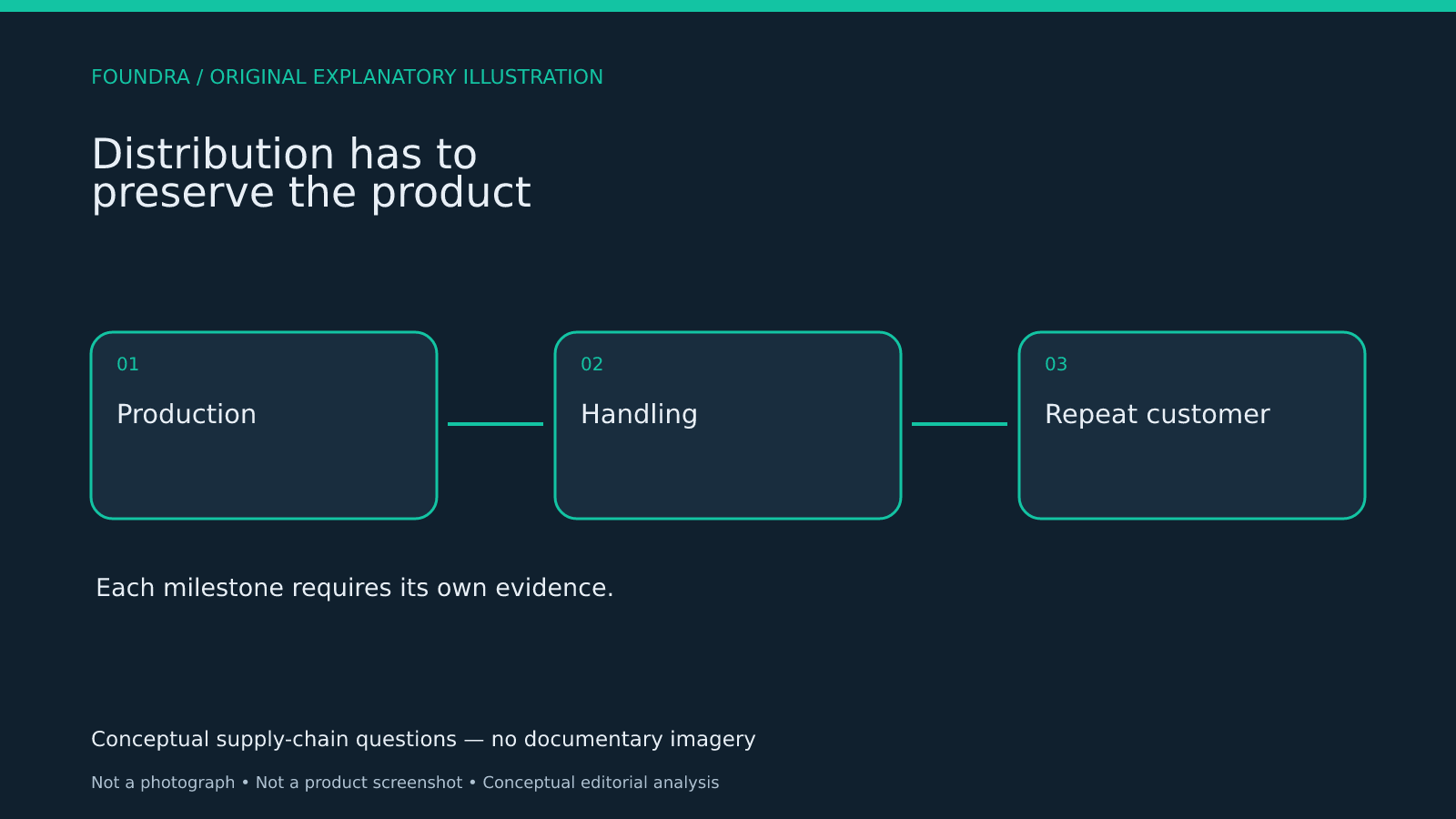
Consumer distribution can appear to be a simple measure of reach: more cities, more channels, more places to buy. For a physical food product, reach is also the result of production planning, handling and replenishment. A product listing does not by itself show that the customer reliably receives the intended item in the intended condition.
A hypothetical expansion could add channels faster than the underlying supply process can support them. The company might gain nominal access while facing inconsistent availability or higher handling costs. That is a general scenario for evaluating growth, not a reported Henfruit problem.
The useful evidence would connect an actual purchase experience to the supply process. What is available, how consistently, with what information about the product and at what cost to serve? A city count is a starting point for that inquiry, not a substitute for it.
Likewise, a brand’s traceability or quality description should be assessed at the level of the claim being made. A system for recording product origin is not, by itself, an independent finding about every health, freshness or nutritional proposition. This article does not certify product quality or reproduce unverified health claims.
Expansion is not one metric
Reach
Where can a customer actually buy the product?
Integrity
What evidence supports handling and product claims?
Economics
What remains after the costs of reaching that customer?
Repeat demand
Does the customer return after the first purchase?
Outside capital can make hidden decisions explicit
A bootstrapped organization may have evolved around constraints that shaped its choices without being written into a formal plan. Which channels are worth serving? How much working capital can be committed? When should capacity be added? Institutional funding can create room to revisit those questions, but it does not make them disappear.
One danger in reading a first external round is to treat the new capital as evidence that every earlier constraint was accidental. Some constraints may have preserved focus or made the economics manageable. The relevant task is to distinguish limits that should be removed from disciplines that should survive expansion.
For an illustrative founder deciding between two channels, the higher sales opportunity might also require more inventory, different packaging or a longer wait for cash. Without those details, volume alone is not a reliable basis for the choice. This is general business reasoning, not a disclosure of Henfruit’s channel terms.
A financing announcement rarely supplies enough information to judge the resulting governance changes. Readers should not infer board arrangements, founder control or investor exit plans from the round label. Those matters require actual transaction evidence.
Reported future revenue expectations can provide a reference point, but should remain forecasts. The more useful follow-up evidence would show how distribution, capacity and realized economics develop together. A bigger network is not an improvement if it merely shifts costs or makes the product less dependable.
Founders building physical consumer businesses can read the round as a reminder that capital and capability are different resources. Money may pay for equipment, inventory or teams; the business still has to establish that the resulting process works at the new scale.
Henfruit’s long operating history makes this less a story about starting from zero than about carrying an existing business into a different financing phase. The meaningful result will be controlled expansion that preserves what customers buy the brand for, not simply a faster accumulation of distribution points.
Sources
- Indian Startup News ↗ Indian Startup News
- Inc42 ↗ Inc42
Have additional information? Request a correction.