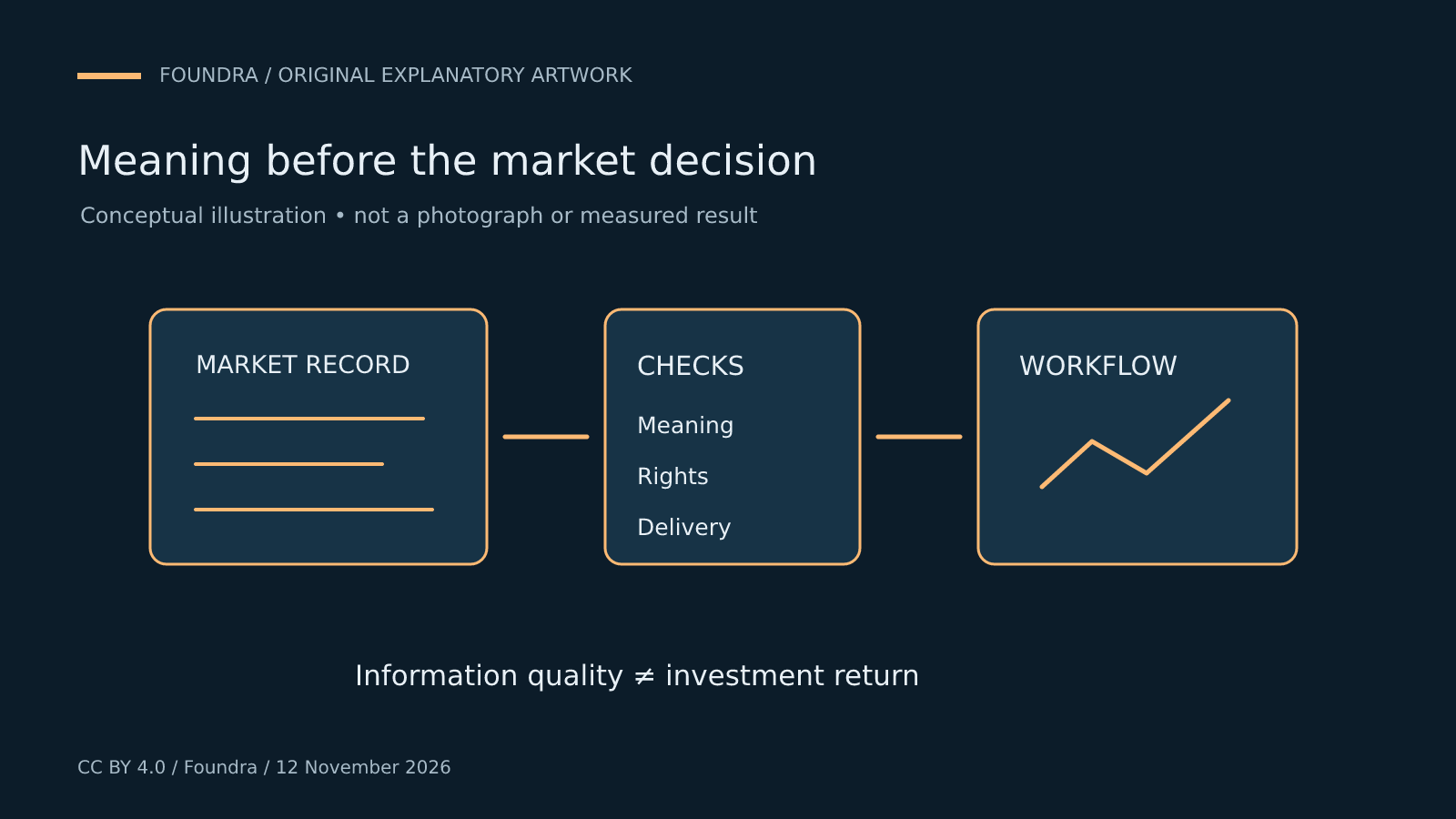
A national rail’s announced launch does not verify every provider’s access or every customer-facing product.
A launch date is not yet a live rail
Canada's Real-Time Rail has a newly confirmed launch date: Monday, November 9, 2026. Payments Canada stated that date on November 5 in its response to Budget 2026. As of this article's November 6 publication, the date is still in the future. The announcement is therefore confirmation of a planned launch, not evidence that the rail is already operating for the public.
Payments Canada describes the system as enabling participating members, including financial institutions, credit unions and payment service providers, to exchange, clear and settle payments in seconds around the clock. That is the operator's description of the intended system. Foundra has not carried out a transaction over the rail or verified individual providers' launch-day access.
For fintech builders, the difference between a national infrastructure milestone and a ready customer product is essential. A rail can supply capabilities that businesses build on. It does not by itself establish which application a customer can use, what it costs or what protections apply to a particular payment journey.
The useful promise is data plus movement
The operator emphasizes data-rich payments and immediate access to funds. In analytical terms, payment information can be valuable alongside speed because a business needs to know what an incoming transfer represents. A faster transfer with inadequate identification could still leave work in matching it to an invoice or customer account.
Consider a hypothetical small business receiving several similar payments. If its software can link each transfer to the correct obligation, the business could reduce manual reconciliation. If it cannot, instant movement alone would not complete the administrative process. This is a possible product use case, not a measured result from the Real-Time Rail.
That gives founders a more precise problem to solve than simply advertising faster payments. They could evaluate how payment data enters an application, how it is retained and how users resolve mismatches. The operator announcement establishes neither a particular integration design nor a quantified saving on those tasks.
Availability also needs to be traced through the participating provider. The release describes participating Payments Canada members, not universal direct access for every startup. A founder should verify the actual route through which the business would use the system rather than infer eligibility from the existence of the rail.
Three dated or conditional milestones
November 5
Operator publishes confirmation of the planned launch date.
November 9
Announced future launch; operational status is not verified on November 6.
Product access
Provider participation and customer journeys need their own evidence.
International work
Proposed European connectivity is not a live corridor established by this announcement.
Faster settlement changes the service questions
The planned speed makes support and authorization important topics for product design. Before a user confirms a payment, an application should communicate the destination, amount and purpose clearly. Afterward, it should be able to explain status without treating an uncertain screen state as proof of settlement.
Those are general design considerations. The announcement does not provide a complete account of consumer remedies, provider-specific controls or the treatment of a mistaken transaction. Foundra does not assume an answer from the system's name or speed.
A fintech product also needs to distinguish infrastructure reliability from its own interface reliability. Even if a rail behaves as designed, a customer's application could still have a confusing confirmation flow, a delayed status update or an incorrect mapping between a transfer and an invoice. A launch-day product test would need to follow the end-to-end journey.
This is why the date should be understood as an opportunity to verify readiness rather than as a reason to announce untested functionality. A startup can prepare for a new capability while being explicit about dependencies, access and what remains to be checked after launch.
Payments Canada also points to work supporting a connection between the Real-Time Rail and European instant-payment systems. That is a stated direction of cooperation, not confirmation that a live Canada-Europe corridor is available now. International standards and an ambition to connect do not establish completed interoperability.
The immediate milestone remains domestic and dated. November 9 is the announced launch; November 5 is the fresh confirmation being reported. If the system becomes available as planned, subsequent evidence can establish participating access and actual product behavior. Until then, the responsible fintech story is preparation for a faster, data-rich rail—not a demonstration that every promised use case has already arrived.
Sources
- Payments Canada: Real-Time Rail launch confirmation ↗ Payments Canada: Real-Time Rail launch confirmation · Primary source
- BetaKit: Real-Time Rail launch report ↗ BetaKit: Real-Time Rail launch report
Have additional information? Request a correction.