Evaluate research acceleration at the project level and keep product usage, capability and modeled outcomes separate.
A map of use, not a score for scientific progress
Anthropic's November 5 report begins with a large activity dataset: 207,000 Claude and Claude Code research sessions. What it measures is narrower than the question its subject naturally raises. Sessions can show how people interact with a research assistant; they do not directly count completed discoveries or establish how much faster science has become.
The company says its methods are privacy-preserving. Its report examines differences between scientific fields, differences between research tasks, and scenarios for future acceleration. Those are three distinct exercises. Reading them separately avoids treating an observed pattern in the product as a measured outcome for every researcher.
Anthropic is the provider of the tools being studied. That relationship belongs in the account of the source. The report is primary evidence for its authors' methods and findings, not an independently authenticated census of scientific AI use across providers.
Analysis and writing occupy a different place from idea generation
The reported task mix is concrete. Data analysis accounts for about one-third of sessions on Claude and nearly half on Claude Code. The report also identifies writing as a prominent use. Relative to the number of researchers in each field, it finds greater use in formal sciences such as computer science, mathematics and statistics, and lower use in health and laboratory-based physical sciences.
These are shares of studied activity, not shares of discoveries caused by AI. A task can attract many sessions because it is frequent, useful to perform through the product or requires repeated interaction. The session count alone does not distinguish those explanations or measure the quality of the resulting work.
The report provides another comparison through a survey. Researchers rank idea generation and data gathering as especially important for discovery, while those tasks account for less Claude use than analysis and writing. The contrast is between perceived importance and observed product activity. It does not show that researchers are wrong about their priorities or that every underused task is ready for automation.
For a research-software founder, that contrast is a useful starting question: is the product improving the step that constrains the customer's project, or the step easiest to perform in a chat or coding environment? The answers may differ across disciplines. The report's field and task breakdowns are more informative for that inquiry than a single aggregate usage number.
Do not collapse three research measures
Observed use
Sessions describe activity within the studied products, not every researcher.
Task capability
Suitability measures concern what systems may do, not every completed research project.
Project outcome
Acceleration requires outcome evidence; modeled scenarios are not observed gains.
The acceleration scenarios change assumptions
Anthropic constructs a measure of how well AI could perform different research tasks and examines how that measure relates to observed use. It also models scenarios under different levels of capability and adoption. A scenario is a calculation under assumptions, not an observed productivity increase or a guaranteed forecast.
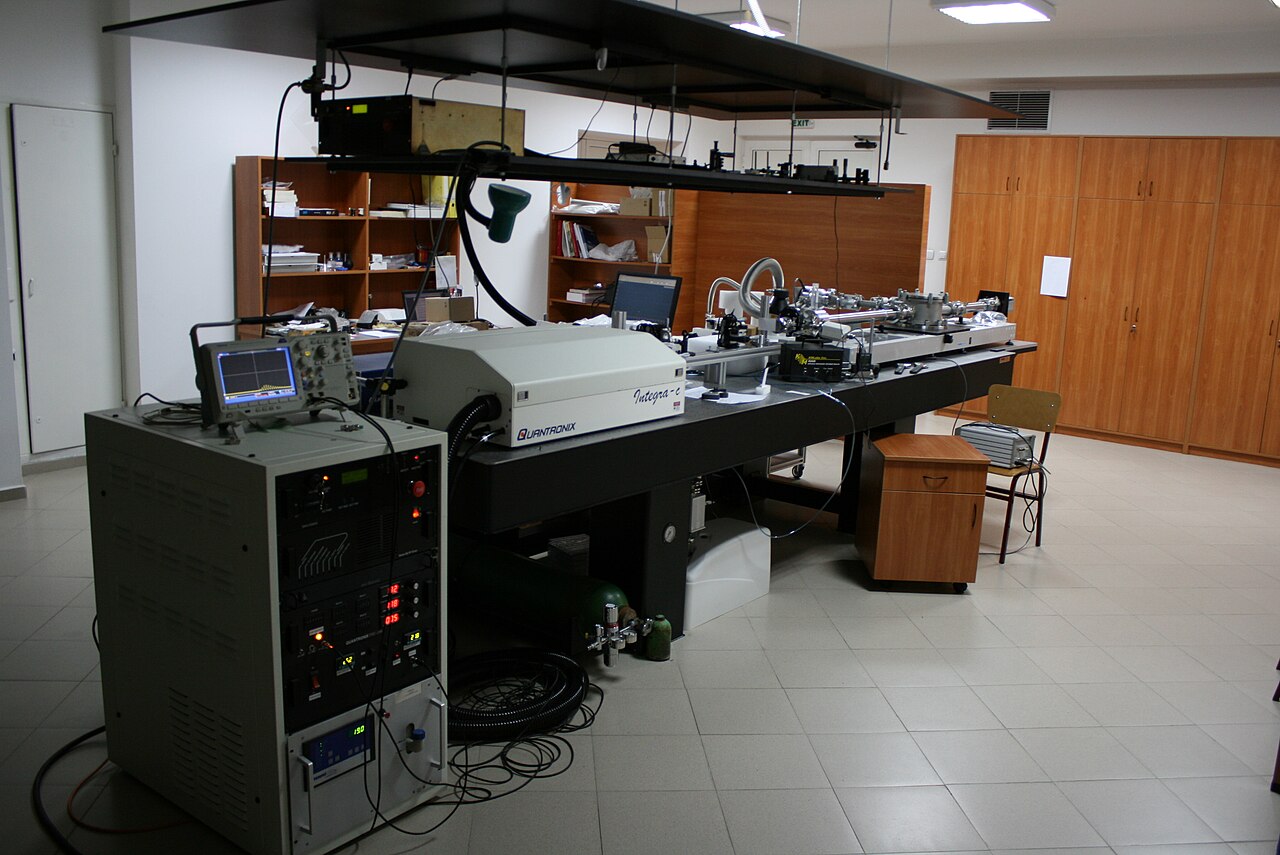
The role of physical work is especially important. In a project that depends on a laboratory measurement, shortening a computational step may leave the physical schedule unchanged. That is an analytical consequence of tasks being linked, not evidence from an experiment conducted by Foundra.
A computational field could have a different task structure, so the same improvement in a tool might have a different effect on the whole project. This is why the report's distinctions between fields matter. A universal acceleration figure would obscure the very bottlenecks the analysis is trying to identify.
The appropriate evaluation unit therefore changes with the claim. A successful answer can support a claim about a bounded task. A faster completed project would be needed for a claim about project acceleration. A broader claim about scientific output would require a broader comparison. None can be substituted for the others merely because all concern AI in research.
What the report contributes now
The study supplies a differentiated account of activity within Anthropic's research tools: which tasks receive use, how fields differ and how those patterns relate to a constructed capability measure. Its survey and scenarios extend the discussion, but do not turn session data into causal evidence of discoveries.
The useful result is a set of distinctions that can guide more specific evaluation. Analysis-heavy usage may point to a practical tool fit; low usage in a physical task may point to a different constraint. Neither observation is a universal recommendation. The report makes scientific AI use more legible while leaving the harder outcome question—what changes in completed research—to evidence designed to answer it.
Sources
- Anthropic: AI for scientific discovery research report ↗ Anthropic: AI for scientific discovery research report · Primary source
Have additional information? Request a correction.