Generality and performance need sustained task results with visible intervention rates; financing does not validate superhuman claims.
Fast at one task, useful at another
A robot that performs one repeated movement quickly and a robot that adapts to an unfamiliar object solve different problems. Eka Robotics is arguing that a commercial system needs both performance and generality. Its new financing backs an effort to join those qualities rather than treating a flexible demonstration as a finished product.
The company’s October 20, 2026 announcement disclosed a $150 million Series A led by Andreessen Horowitz and F-Prime, with support from other investors. TechCrunch reported the round at a $1.45 billion post-money valuation. That reported valuation is a financing measure, not an independent assessment that the technology is worth a particular amount in customer outcomes.
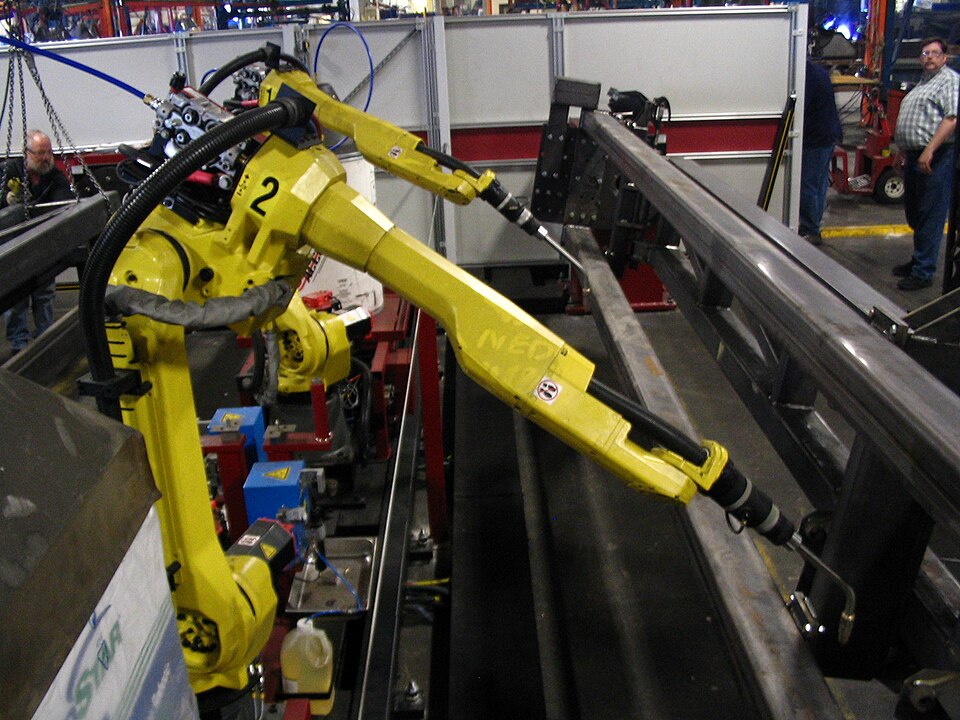
Eka’s primary announcement focuses on dexterous manipulation and the use of physical interaction in a robot’s understanding of a task. It describes ambitions to scale technology and customer deployments. The company’s language about superhuman performance remains a company claim. Foundra has not tested the system or independently verified its advertised throughput.
The useful distinction is between seeing an object and responding to contact with it. Vision can help locate a part. Manipulation also requires a system to determine what happens when it grips, pushes or inserts that part. A persuasive commercial result must include the interaction, not only recognition of the object before the robot moves.
A demonstration hides the denominator
Consider a hypothetical packing task involving unfamiliar items. A robot may successfully pick up several objects in a video. To evaluate a deployment, a buyer also needs the total number of attempts, the range of objects, the rate of interventions and the consequences of failures. A successful sequence is evidence of possibility, not of average operating performance.
The same applies to speed. Counting completed movements without accounting for damaged goods, resets or human assistance can make two systems appear more comparable than they are. A useful performance measure would follow the task to its accepted outcome. This is an analytical standard for evaluation, not an allegation that Eka has omitted particular results.
TechCrunch’s report discusses the startup’s physical AI approach and its financing. Reporting enthusiasm about a technology does not convert company demonstrations into independent operational proof. The distinction matters particularly when a general-purpose ambition is being contrasted with robots designed for tightly specified work.
Conventional specialised systems can be valuable precisely because the task and environment are constrained. Flexibility is not automatically preferable if a buyer needs one operation performed consistently. A more general system has to show that adapting to variation produces enough value to justify its complexity. The commercial question is not which robot sounds more intelligent; it is which system fits the operation.
A deployment needs more than a successful movement
Variation
Define the range of tasks and inputs being evaluated.
Outcome
Count accepted results, not only attempted movements.
Intervention
Make assistance, resets and recovery visible.
Operation
Assess sustained use within the customer’s workflow.
Deployment means living with variation
Factories and fulfilment environments can present changes that are not dramatic enough to attract attention in a demonstration: a different supplier batch, altered packaging, a worn surface or a part positioned slightly differently. A system intended for broad manipulation would need a practical way to handle variation and to recognise when it should stop or ask for help.
That makes recovery behaviour important. A robot that detects uncertainty and pauses may be more useful than one that continues confidently into a costly error. Buyers should know how an intervention changes the system’s future behaviour and whether the record is useful for diagnosing recurring problems. These are proposed deployment questions, not observed faults in Eka’s product.
There is also a boundary between learning a new task and running it safely within a customer’s operation. Installation, access controls, maintenance and human supervision can affect the cost of deployment. A model’s capability is one part of that broader system. The financing announcement does not independently establish all of the surrounding requirements.
Eka’s $150 million round is significant because it gives the company resources to pursue this difficult combination of adaptability and dependable execution. The most valuable next evidence would show how the system behaves over sustained work with clearly defined tasks and intervention rates. Until then, the round supports an ambitious robotics programme; it does not certify a universal replacement for human hands.
Sources
- Eka Robotics: Series A announcement ↗ Eka Robotics: Series A announcement · Primary source
- TechCrunch: Eka financing and technology ↗ TechCrunch: Eka financing and technology
Have additional information? Request a correction.