Sequential charging requires reliable session control; the project’s next version and V2G work are future development, not a launched service.
£750,000 is the project value
Go Eve has secured Innovate UK backing and private investment for a DockChain development project worth £750,000. That is not the same statement as announcing a £750,000 venture-equity round. The company’s original release is dated October 19, 2026; Tech.eu reported the development on October 21.
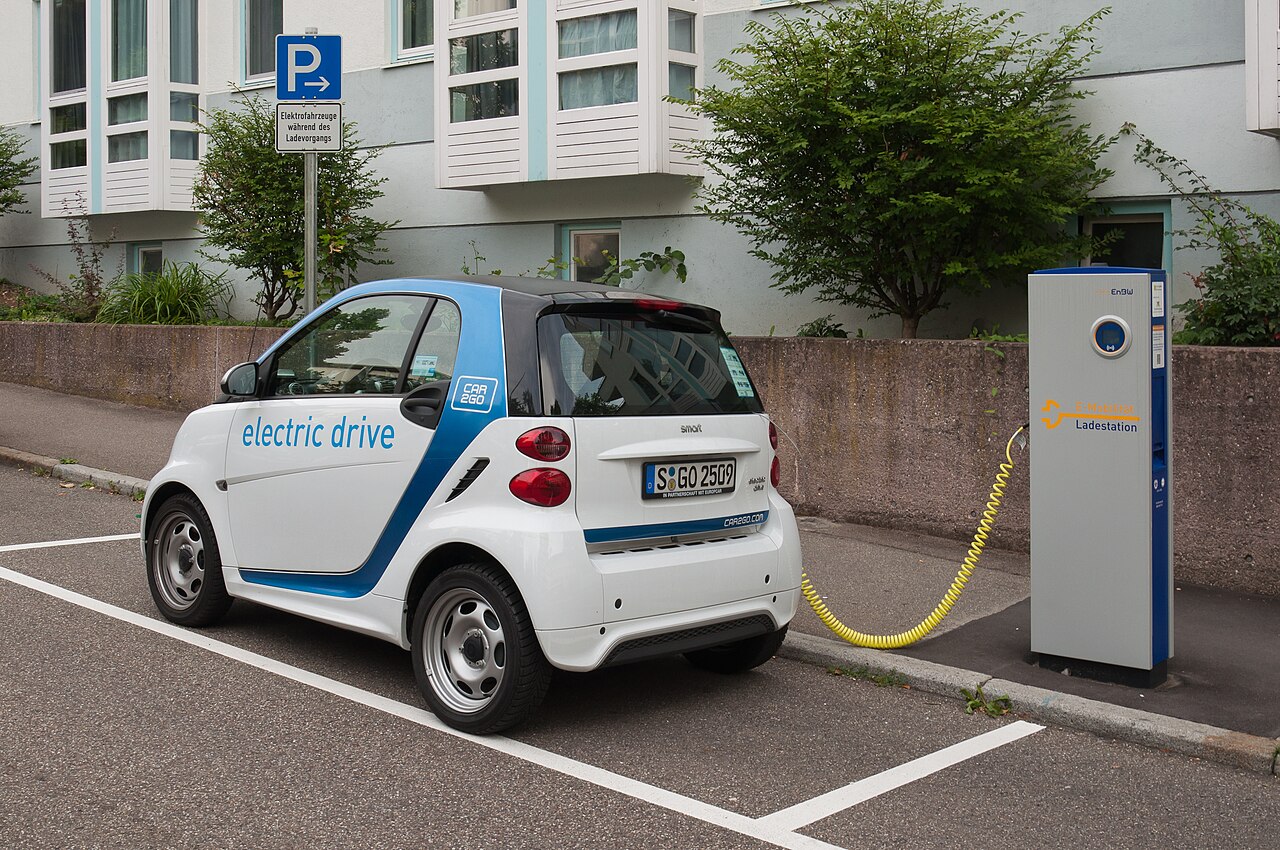
The primary announcement describes an 18-month effort to improve hardware, firmware and software for DockChain, a system that extends a compatible DC fast charger across multiple parking bays. Vehicles stay connected while the charger serves them sequentially, one at a time. The project also plans to explore bidirectional charging and vehicle-to-grid potential. Exploration is not a launched V2G service.
This is a climate-infrastructure story about a surprisingly ordinary failure mode: a plugged-in vehicle does not always start, stop or restart charging as an operator expects. Go Eve says it wants more reliable control over those transitions. The company aims for a production-ready version in 2027 and says existing units will be eligible for upgrades.
Sequential is not simultaneous
A charger serving several connected vehicles in sequence does not charge all of them at full power simultaneously. That distinction determines where the arrangement can be useful. A depot with predictable parking periods may have different needs from a roadside site where every driver expects to leave quickly.
Consider a hypothetical fleet returning in the evening. If vehicles have enough time before their next departure, a shared charger could serve successive bays without requiring someone to move each vehicle. The practical question is whether the schedule provides enough energy for each vehicle at the required time. Adding more connected bays does not create more energy or a faster grid connection.
What sequential charging coordinates
Connect
Vehicles remain connected across multiple parking bays.
Serve
A compatible charger serves vehicles one at a time.
Restart
The new project aims to improve stop/start/restart control.
Explore
V2G potential is a separate development question.
Restarting is a system problem
Go Eve’s project announcement identifies variation in vehicle behaviour as a reason for the development work. That is a company account of observed operating issues, not an independent reliability study. It nevertheless makes the project’s focus specific: charging coordination can fail at the boundary between charger, vehicle and control software.
If a session pauses and the next one does not begin as intended, the problem may not be visible until a vehicle is needed. A fleet operator would reasonably want a clear status record, an alert and a recovery path. A dashboard that says a vehicle is plugged in is not necessarily evidence that the required charging has happened.
Evaluating a sequential system therefore calls for more than a successful first connection. A useful trial would include different vehicles, interrupted sessions and changed departure priorities. Those are proposed conditions for assessment, not tests performed by Foundra. The announced project is intended to improve the relevant capabilities; its results remain to be established.
V2G is a separate step
The possibility of sending energy back from vehicles adds another layer of coordination. A vehicle’s availability, its energy needs and the site’s operating rules all matter. Go Eve’s decision to explore the technology should not be presented as evidence that fleet customers can already earn revenue through the new DockChain version.
This is an important reporting boundary. Development funding, a production target and a future service opportunity are three different things. Combining them can make a project sound like an already operating commercial offer, particularly when the headline compresses a technical roadmap into a funding number.
What the upgrade would need to prove
The relevant outcome is not simply more connectors on a site. It is dependable completion of a charging schedule under the conditions the operator actually faces. Existing-unit upgradeability could be useful if it lets customers improve a deployed system rather than replace it, but the announcement does not establish the cost or timetable of every upgrade.
For founders in charging infrastructure, the project highlights a product lesson: interoperability and recovery behaviour can be as important as headline power ratings. The user does not experience the charger, vehicle and scheduling software as separate products when a van is not ready for its shift. The system either supports the operation or it does not.
Go Eve’s £750,000 project is funding an attempt to make that combined experience more reliable and flexible. Its near-term story is the work on session control. Its later story may include V2G. Keeping those stages separate gives the company credit for the development it has actually announced without awarding it results it has not yet produced.
Sources
- Go Eve: DockChain development project ↗ Go Eve: DockChain development project · Primary source
- Tech.eu: Go Eve project funding ↗ Tech.eu: Go Eve project funding
Have additional information? Request a correction.