Funding, certification, manufacturing and delivery must remain distinct milestones.
A winged approach to personal vertical flight
Skyfly’s Axe is described by its developer as a two-seat electric aircraft that can take off vertically and use its wings in forward flight. That combination is the central product idea behind the company’s new financing. It is an aircraft architecture, not simply a promise to put more powerful rotors on a personal vehicle.
In its funding release, Skyfly says the Axe uses eight fixed-angle electric motors and does not rely on tilting motors or rotating wings. Those are company descriptions of the design. They do not independently establish lower operating costs, superior safety or the performance figures promoted elsewhere in the announcement.
The distinction between hovering and wing-supported flight gives the design a specific engineering logic. In hover, the propulsion system must support the aircraft. In forward flight, wings can contribute aerodynamic lift. Combining the modes creates a different product from a rotor-only concept, but the benefit depends on the complete implementation. An architectural explanation is not a substitute for demonstrated operating performance.
The seed round and the owner market
The British developer announced on October 20, 2026 that it had closed a $10 million seed round led by HICO Investment Group, with Archangel participating. The stated priorities include certification work, production capacity and development of hybrid propulsion and the unmanned Longbow. First customer deliveries are planned for 2027, not reported as completed.
Skyfly also reports 61 private customers on its order book. That is a company-reported measure of interest or commitments, not proof that 61 aircraft have been delivered or that every order has the same terms. Keeping orders separate from shipments gives a clearer picture of the stage the business has reached.
The private-owner focus matters commercially. A person buying an aircraft will need an operating and support relationship as well as a vehicle. Maintenance information, training and access to parts can shape the usefulness of ownership. The funding disclosure does not establish the complete cost or terms of that experience, so projected operating-cost comparisons should not be treated as proven buyer outcomes.
The design’s ability to use different flight modes also makes “needs no runway” an incomplete way to understand the product. Vertical operation and conventional forward flight can serve different situations. A customer’s intended use must be evaluated within the aircraft’s actual approved capabilities and operating requirements when those are established, rather than inferred from a promotional phrase.
Four milestones, not one launch
Financing
The $10 million seed close was announced October 20.
Certification work
Approval work is a use of funds, not a claimed completed approval.
Production
Building repeatable units is separate from a prototype demonstration.
Delivery
First customer deliveries are planned for 2027.
The unmanned programme changes the customer
Longbow is described as an unmanned, hybrid-electric variant aimed at defence and government uses. That is a different buyer relationship from personal ownership of a two-seat aircraft. Cargo or special-mission requirements can place different demands on control, support and integration. Progress toward a private-owner product should not automatically be credited as completion of the unmanned programme.
Sharing an underlying architecture could be useful to a developer, but it does not make every requirement shared. A piloted aircraft includes a person making operational decisions onboard. An unmanned product has to fit another control arrangement and a customer's mission. The value of common development would depend on what can actually be reused across those different needs.
This is an aircraft-specific reason to keep the financing priorities visible. The company is not funding a single software feature with two names. It is pursuing a personal aircraft and a related unmanned direction while also developing propulsion. The announcement gives those intended programmes; it does not demonstrate every resulting configuration or mission capability.
A production aircraft is an ongoing relationship
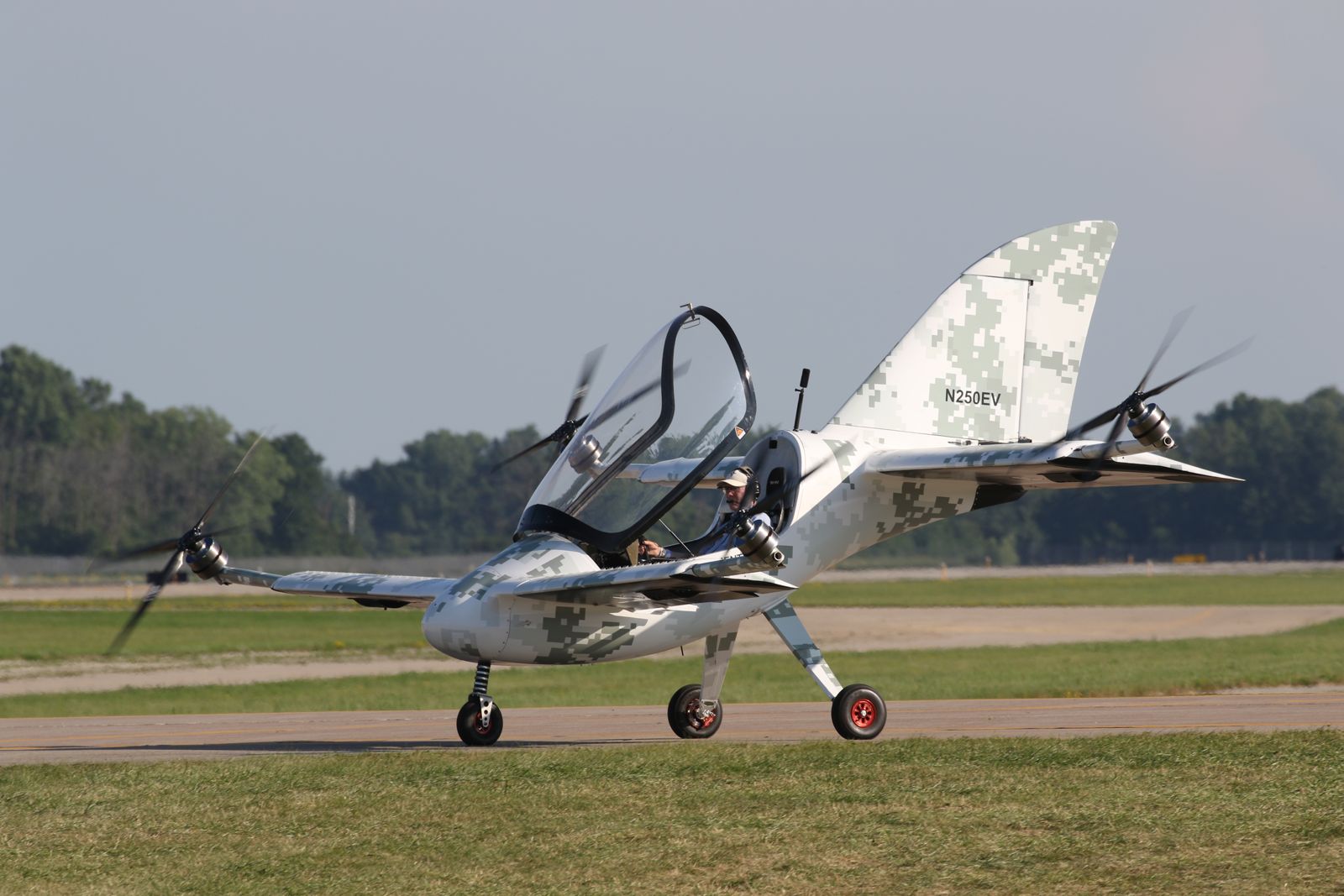
The photograph supplied in Skyfly’s editorial media directory shows an aircraft on a paved surface with its canopy open. It is useful evidence of the subject’s appearance, not evidence of certification, a completed customer delivery or a particular flight performance. Those claims require their own records.
For the business, the important transition is from a developer-controlled prototype to a product maintained in customers’ hands. A design change that is manageable during development can become a support decision once aircraft are operating elsewhere. Production consistency and documentation therefore matter alongside the underlying flight concept.
The $10 million round supplies resources for that transition. Its distinctive bet is on a winged, vertically capable architecture serving a personal-owner market while supporting a related unmanned programme. The 2027 delivery plan remains a plan. The next informative progress would make clear which aircraft configuration and which customer relationship it concerns, rather than allowing one programme’s milestone to stand in for the whole company.
Sources
- Skyfly: seed financing announcement ↗ Skyfly: seed financing announcement · Primary source
- Skyfly: company and press information ↗ Skyfly: company and press information · Primary source
Have additional information? Request a correction.