Compare the complete deployment arrangement—memory, software, terms and operating responsibility—not just the model’s active-parameter count.
The small print changes the picture
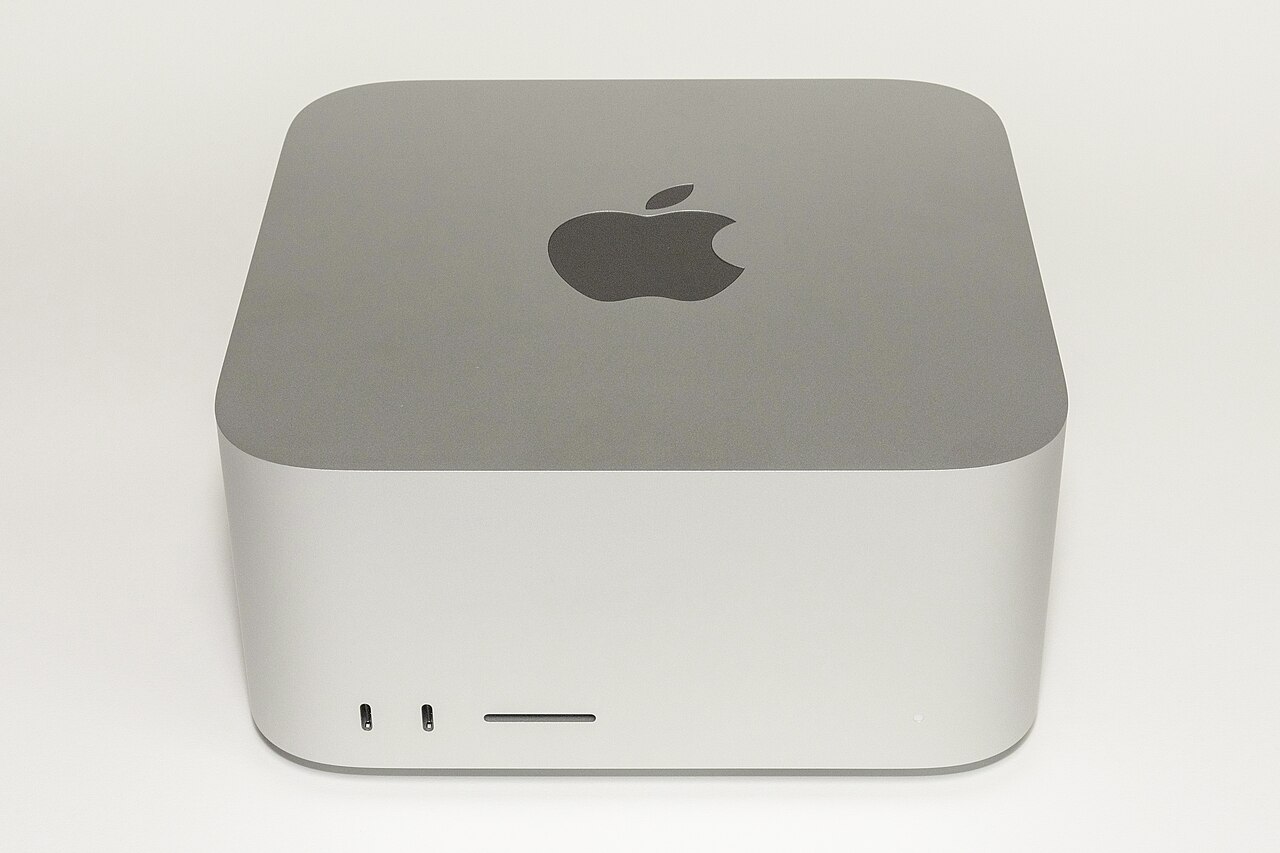
A model that can run on a desktop is not necessarily a model that can run on the desktop already sitting in a developer's office. Meta's October 15 Muse Spark Open release describes a particular arrangement: two Apple M5 Ultra Mac Studios, using the MLX framework. The number of machines is an important qualification, not an incidental detail to lose behind the phrase on-device AI.
Meta describes Muse Spark Open as a natively multimodal model with 816 billion total parameters, 42 billion active parameters and a one-million-token context window. These are the vendor's published specifications. The company also makes capability and benchmark claims, but this article does not establish those rankings through independent testing. A specification can identify what to investigate without predicting performance on a buyer's application.
Active parameters do not stand in for the whole model
The distinction between total and active parameters helps explain why a large model can have a smaller per-step computational footprint than its overall weight count might suggest. It does not make the inactive weights vanish from the deployment. A prospective operator should therefore avoid using the smaller number as a simple proxy for memory requirements, equipment cost or the ease of moving the model between environments.
Meta's release says the two Mac Studios provide a combined terabyte of unified memory. That is the configuration behind its desktop example. It is not evidence that an ordinary laptop can hold the model or reproduce the demonstration. Nor does it establish that every supported inference setup has the same throughput, latency or energy profile. Those comparisons would require measurements with an identified configuration.
For a startup, that changes the buying question. The alternative is not necessarily local hardware versus an abstract cloud. It is a specific local arrangement, with acquisition and operating responsibilities, versus specific hosted arrangements with their own terms and charges. The useful comparison follows the expected workload rather than choosing a deployment category first and searching for a justification later.
The distinctions behind “runs locally”
Model
Separate total weights from parameters active during computation.
Hardware
Check the memory and multi-machine arrangement actually described.
Software
Account for the inference framework and operating environment.
Terms
Review the model licence before commercial deployment.
Weights, access and permission are different things
Meta’s licence description says the weights use the Muse Model License with limited commercial terms. That is why open-weight is the appropriate description here. It should not be silently upgraded to unrestricted open-source software or a claim that every commercial use is permitted. Availability and permission are related, but they are not the same property.
The announcement also lists hosted access and downloadable distribution channels. Those options may let a developer explore the model without immediately recreating the desktop configuration. They do not eliminate the need to check the terms governing the chosen route. A hosted provider's service arrangement and the underlying model licence can impose different obligations on a product team.
This matters most when an experiment turns into a dependency. Before committing to a deployment, a founder should identify which rights are required for the proposed use, whether the operating arrangement is compatible with them and what changes if the service grows. These are practical diligence questions, not a legal interpretation of the licence or a claim about an undisclosed restriction.
The workload is the unit of comparison
A useful evaluation could start with one representative application and hold the task definition constant across deployment choices. For example, a hypothetical coding assistant could be assessed on whether its proposed changes pass the project's tests, how much review it requires and whether it operates within the agreed access boundaries. This is an illustrative evaluation design, not a reported test of Muse Spark Open.
The context-window specification deserves similar discipline. A large supported window can be relevant to document-heavy work, but it does not automatically establish that every task benefits from filling it. The test should ask whether relevant information is used correctly, not simply how much text can be supplied. More capacity is meaningful when it changes the quality or feasibility of the chosen workflow.
A release that makes the deployment choice more concrete
Muse Spark Open adds another option for developers considering where to run a capable model. The noteworthy detail is that Meta has described both the model and a substantial local configuration, rather than leaving desktop capability wholly abstract. That provides a clearer starting point for evaluation, while retaining the gap between a vendor demonstration and the requirements of a production service.
The next decision is therefore not whether local AI sounds attractive. It is whether this model, under these terms and on an appropriate arrangement of hardware and software, fits the work a team needs to perform. The two-machine qualification does not diminish the release. It makes the practical meaning of the release harder to misunderstand.
Sources
- Meta AI Research original release ↗ Meta AI Research original release · Primary source
- TechCrunch release report ↗ TechCrunch release report
Have additional information? Request a correction.