The funding supports research and development; it does not establish field effectiveness, regulatory approval or protection of beneficial insects.
Two funding stages under one headline amount
Molagri's October 14 announcement reports $5.8 million in total US-dollar pre-seed and seed funding. That is a combined amount, not a single $5.8 million seed round. BetaKit's subsequent report describes a $5.2 million seed portion and roughly $600,000 raised before the company joined Y Combinator. The distinction makes the financing easier to understand without converting a cumulative total into one transaction.
The company says Convective Capital led the seed round, with Y Combinator, Superorganism, Robinhood Ventures, Paul Graham and other angels participating. Julian Capital led the earlier pre-seed. The primary announcement anchors the original date; the October 15 coverage does not make it a new October 15 announcement. This article uses the US-dollar amounts without presenting a new currency conversion as a separate fact.
The Toronto startup describes a modular biological approach to crop protection. Its financing is intended to expand scientific work and development capacity, while BetaKit reports planned hiring and field trials. Those are the development plans behind the disclosure. Neither source establishes that the company has already received a product approval or demonstrated broad commercial performance in growers' fields.
Targeting is the proposition, not the result
Molagri describes non-infectious, engineered virus-like particles that recognise receptors in target pest insects and deliver instructions for an insecticidal payload. The proposed modular design is intended to let the company change targeting and payload components as pest challenges change. These are attributed descriptions of the company's platform, not independently verified conclusions about how a finished pesticide performs.
The distinction is particularly important for selectivity. A claim that a design targets a pest is not, on its own, an established finding that every beneficial species remains unaffected in every relevant setting. This article does not report that outcome as proven. The company's proposed mechanism identifies a research question and a product direction; the evidence for a specific application must answer that question separately.
For a founder working on a biological platform, modularity can be an attractive development idea. It suggests that some knowledge or infrastructure might be reused when the target changes. But reusable architecture and a validated new application are different achievements. The latter still depends on the evidence for the changed combination, rather than inheriting certainty merely because part of the platform is shared.
The proposed design and the evidence still needed
Design
Molagri describes modular targeting and payloads in engineered virus-like particles.
Develop
The financing supports scientific hiring and research infrastructure.
Test
Field trials and application-specific evidence remain distinct from the design claim.
Qualify
A product must meet relevant requirements; approval is not established by funding.
The orchard is where the question becomes specific
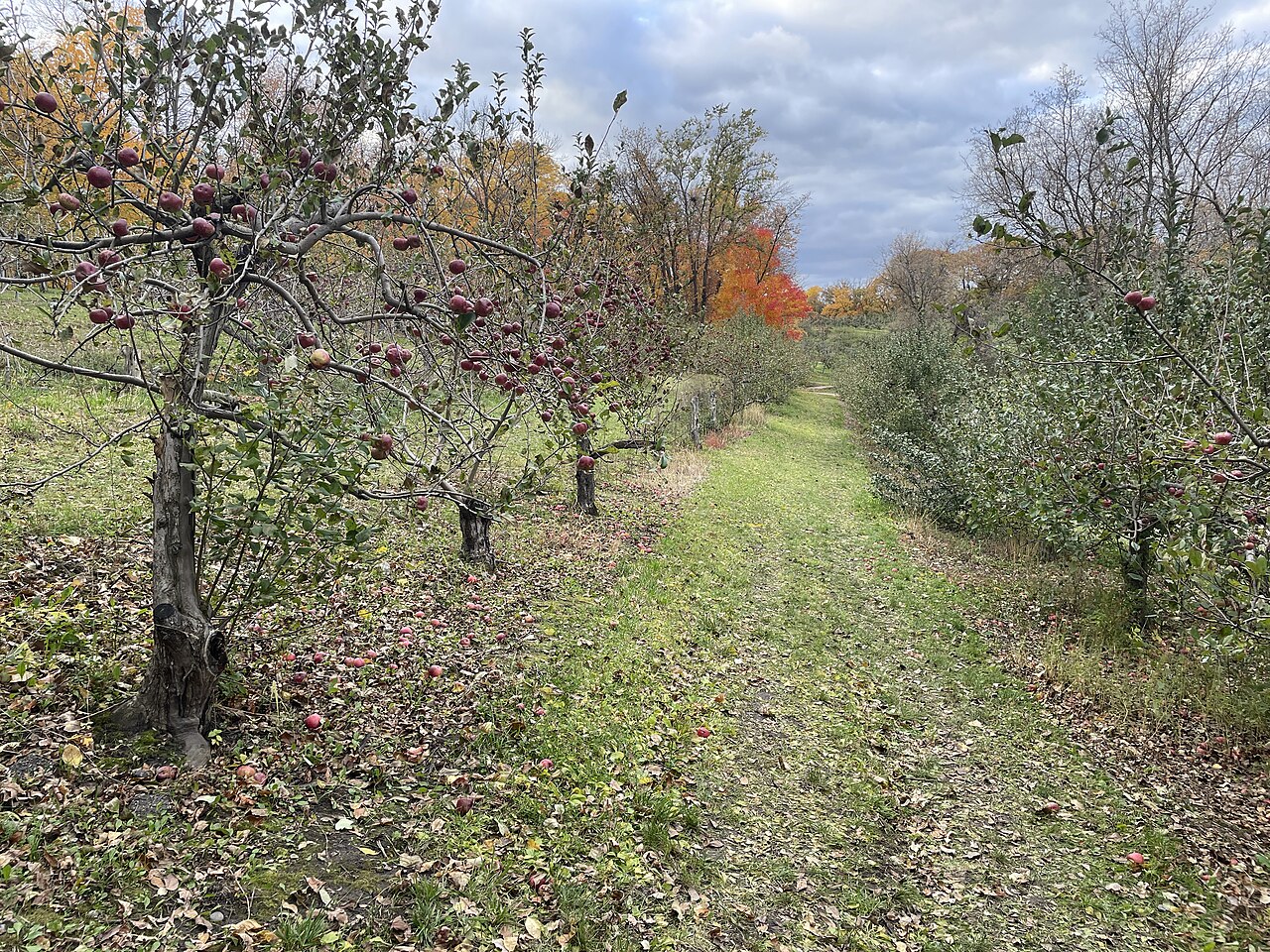
The company says its first products will target pests in tree nuts and tree fruits. That narrows the development story. It is not a statement that all crops, pests or operating conditions are equivalent. A useful account of progress should therefore identify the actual intended application when new evidence appears, instead of treating a platform description as a universal crop-protection claim.
An illustrative assessment might ask how a candidate performs under a defined set of conditions, how results compare with the chosen baseline and what uncertainties remain when conditions change. This is a hypothetical evaluation framework, not a reported Molagri study. It shows why field evidence needs a clear scope: an encouraging observation is useful partly because the reader knows what was observed and what was not.
The financing can help the company build the capacity to do that work. It cannot supply the result in advance. Scientific hiring, laboratory infrastructure and field trials are inputs to a development process. Investors' participation establishes an investment decision, not an independent finding about efficacy, environmental effects or regulatory readiness. That separation is central to reading an early crop-protection round responsibly.
A product needs more than an adaptable design
For a future buyer, the relevant questions will include suitability for the intended use, evidence supporting performance and the requirements governing deployment. Those issues should be assessed when the company provides application-specific information. This article does not assume a regulatory pathway, a sales date or an approval status beyond what the supplied evidence establishes.
There is also a commercial distinction between developing a platform and supplying a repeatable product. A flexible research design can create options, while a product must be specified clearly enough for a customer to understand what it is buying and how it may be used. The company's modular approach could support that translation, but the financing announcement does not demonstrate that the translation is complete.
The modular proposition leaves a specific question: how will a changed targeting or payload combination be assessed for its intended application? Reusing part of a design can make development more coherent without settling the evidence for the changed product. That is the useful distinction behind Molagri's platform ambition, and the one to keep visible as the business develops.
Sources
- Molagri original financing announcement ↗ Molagri original financing announcement · Primary source
- BetaKit financing and development report ↗ BetaKit financing and development report
Have additional information? Request a correction.