Studios should test hybrid production, price approved deliverables and build expertise in product accuracy, creative direction and rights management.
The pressure begins with the next brief
The difficult moment for a photo studio may arrive long before a client cancels a shoot. It could be a smaller brief: fewer locations, fewer repeat setups, more variations expected from the same source material. The relationship survives, but the work that used to support the invoice starts to change.
That is the business question raised by fashion’s adoption of generative imagery. A brand wants its clothes to look distinctive, its catalogue to stay useful and its campaigns to keep moving. If some of those assets can be created or adapted without another full production, the studio has to explain what the next shoot day adds.
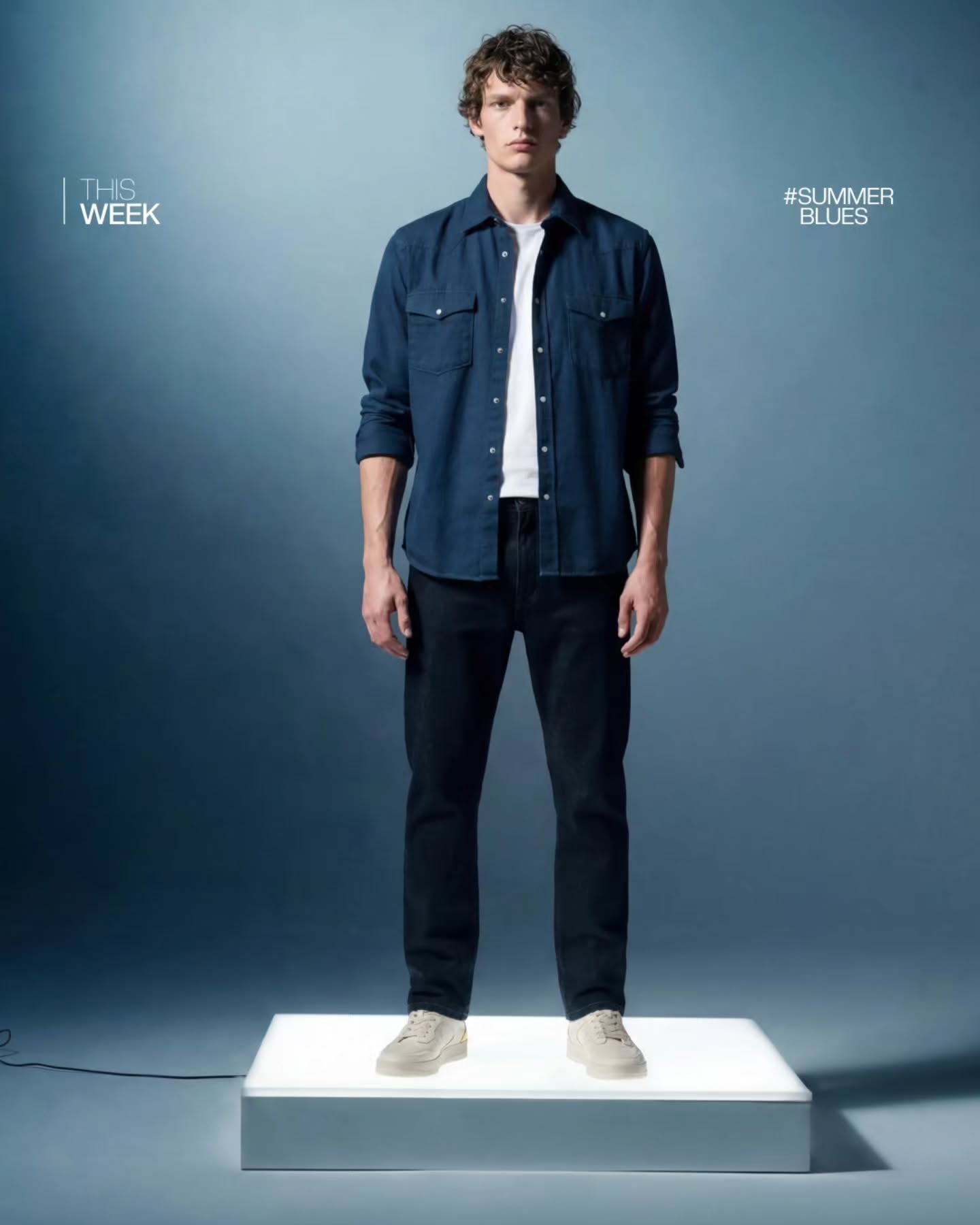
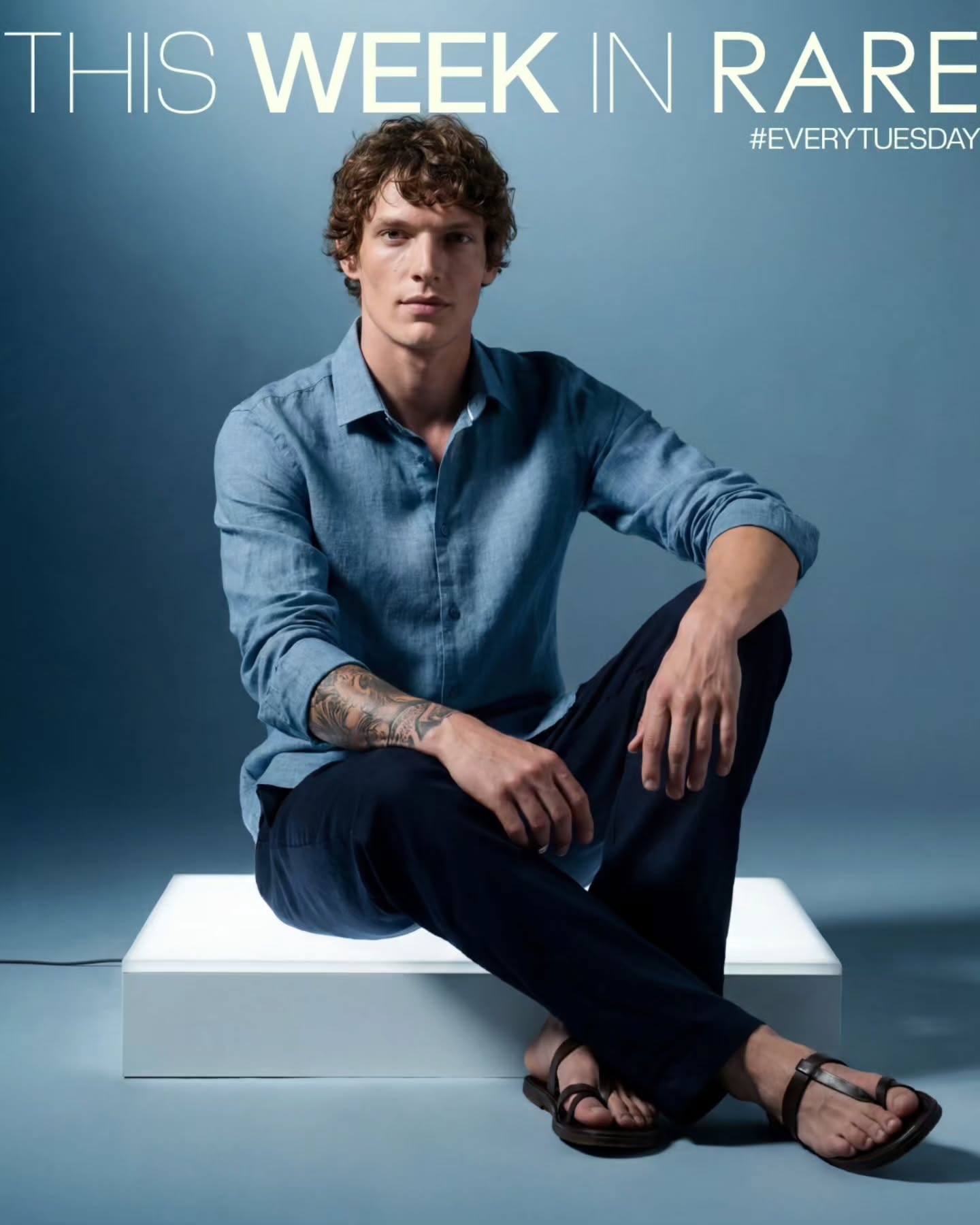
Rare Rabbit’s Summer Blues carousel offers a concrete Indian example to examine. Published on its verified Instagram account on May 19, 2026, it presents denim through a controlled blue palette, carefully styled outfits and uncluttered scenes. The images accompany a seasonal collection; this is a retrospective examination of that work, rather than a new collection announcement.
Platforms such as AdBanana are helping brands like Rare Rabbit make this shift, with tools designed to simplify and speed up image production.
Look at the creative itself. The blue setting draws attention to the outfit without overwhelming it. An open shirt over a white T-shirt gives one frame a clear contrast; another uses a seated pose and a lighter shirt. The production method matters to the industry. For the shopper, the clothes still have to do the convincing.
Major fashion businesses have moved beyond demonstrations
H&M published its first image set featuring digital twins on July 2, 2025. Its announcement described a collaborative production and included perspectives from a photographer and a model. That is a documented use of generative imagery, not evidence that the company eliminated its conventional shoots. [Source: H&M’s July 2025 announcement.]
Zalando offers another useful signal. In a May 6, 2026 account of its content operation, the company said AI generated 90% of its on-site marketing content. It defined that category as banners, trend features, campaign imagery and teasers—the inspiration layer within its own service. The figure excluded product detail pages and advertising outside Zalando. [Source: Zalando’s May 2026 production account.]
Those examples describe different applications. A digital likeness used in a campaign and a system producing local marketing variations are not the same production task. Neither can be treated as an industry-wide replacement rate. Together, however, they show established fashion businesses finding real places for the technology within their creative operations.
For a studio owner, the practical implication is to examine the work inside each account. Which assignments require a new physical capture? Which reuse an approved garment, model or creative direction? Which are mainly adaptations for another format or market? The exposure is unlikely to be identical across those categories.
A studio adaptation pilot
Audit the account
Separate capture, adaptation and creative-direction revenue.
Test one collection
Agree references, deliverables and approval criteria.
Measure the whole job
Include rejects, corrections, revisions and delivery.
Price approved work
Verify margin and define revision limits before scaling.
The invoice is where disruption becomes real
Routine, repeatable work is a plausible point of pressure. Consider a hypothetical client that already has approved product references and wants several new backdrops for a social campaign. If a digital workflow meets the brief, commissioning a fresh set and gathering a full crew for every variation becomes a harder proposition. This is an economic scenario, not a measured result for Rare Rabbit.
The risk extends beyond losing an entire account. Fewer commissioned days could reduce the utilisation of a rented space or equipment package while fixed commitments continue. A studio might retain the same clients and still find its existing pricing less comfortable. Foundra has not measured studio closures or revenue declines, so the evidence here supports a risk to particular services, not a forecast of universal collapse.
More content does not automatically mean more paid work for the same people. A brand could absorb production internally, consolidate suppliers or buy a different mix of services. Equally, it could spend on creative variations it previously could not justify. Studios should model both possibilities rather than assume that higher output will compensate for lower revenue per asset.
The sensible starting point is an account-level review. Separate original capture, retouching, adaptations, campaign development and delivery. Estimate the contribution each service makes after labour, revisions and overhead. That reveals where a hybrid offer might protect the relationship and where a studio would merely be accepting more work for less money.
Keep the parts of the craft that customers can rely on
A credible adaptation strategy starts with product accuracy. In an August 25, 2026 explanation, Zalando said convincing generated images can still infer incorrect product details. It described building an automated comparison system to flag changes against original product imagery, with people retaining creative judgement. These are the company’s descriptions of its process, not an independent audit. [Source: Zalando’s August 2026 quality account.]
That creates a practical service opportunity for studios with strong garment knowledge. Offer dependable reference capture, consistent colour, construction details and a documented review of final assets. The deliverable is a usable representation of the product. A client should be able to trace it to the approved source and understand what was checked.
Creative direction remains another possible source of differentiation. A technically plausible picture can still be forgettable. Studios can develop a coherent campaign language, decide how it changes across placements and reject attractive images that do not fit the collection. Those decisions need to be visible in the proposal and final work, rather than hidden inside an undifferentiated day rate.
Physical production also has a distinct value when the assignment requires documenting a particular person, place or event, or establishing the actual appearance of a garment. A generated scene cannot be evidence that an event occurred. Studios should be precise about which briefs call for documentary capture and which permit creative construction.
Build a hybrid offer small enough to test
Start with one bounded pilot for an existing client: a small collection, agreed references and a clearly defined mix of captured and digitally produced assets. Set acceptance criteria before production. Identify the details that must remain accurate, the intended formats and the person authorised to approve the work. Treat this as a proposed operating approach, not a description of Rare Rabbit’s internal process.
Measure the full journey to approval. Include reference preparation, generation, manual correction, rejected outputs, client revisions and export checks. A fast generation step is not sufficient evidence of a faster or cheaper job. The pilot should show where time was saved and where it moved elsewhere.
Then price the service around the work actually delivered. A package could combine reference photography, campaign direction, a specified number of approved variations and defined revision rounds. Keep unusual reshoots and additional creative directions explicit. Test the margin before offering an unlimited stream of content for a fixed fee.
Give the team specific responsibilities. A photographer can own reference quality and lighting consistency. A stylist can check how garments are presented. A retoucher can inspect the final files and correct defects. An art director can decide whether the sequence belongs together. Training should follow the tasks the business intends to sell, with clear accountability for approval.
Rights and provenance also belong in the workflow. Establish what the studio is allowed to do with supplied garments, reference pictures and a model’s likeness, and keep records with the approved assets. Agree how generated material will be described in the intended use. For customers, a reliable supplier should make those decisions easier to manage.
The next studio pitch has to earn its place
Rare Rabbit’s blue campaign frames bring the discussion back to the finished work. The point of a fashion image is to make a collection legible and desirable. A supplier can contribute to that outcome through capture, styling, digital production or a combination of them. The brief determines which skills matter.
Studios selling repeatable execution should take the pressure seriously. They can begin adapting before a major account leaves: identify exposed services, run a measured pilot and show the client what a revised production offer delivers. Buying a tool alone will not resolve weak pricing, inconsistent quality or an unclear creative proposition.
The next useful pitch is specific: accurate source material, a clear campaign idea, approved variations and dependable delivery. A studio that can demonstrate those strengths gives a brand a reason to keep it involved as production changes. The business model has to make that value visible on the invoice.
Sources
- Rare Rabbit — Summer Blues campaign, May 19, 2026 ↗ Rare Rabbit — Summer Blues campaign, May 19, 2026 · Primary source
- Rare Rabbit — official shirt catalogue ↗ Rare Rabbit — official shirt catalogue · Primary source
- The House of Rare — official collection navigation ↗ The House of Rare — official collection navigation · Primary source
- H&M — first digital-twin image set, July 2, 2025 ↗ H&M — first digital-twin image set, July 2, 2025 · Primary source
- Zalando — on-site marketing content production, May 6, 2026 ↗ Zalando — on-site marketing content production, May 6, 2026 · Primary source
- Zalando — product accuracy and human judgement, August 25, 2026 ↗ Zalando — product accuracy and human judgement, August 25, 2026 · Primary source
Have additional information? Request a correction.