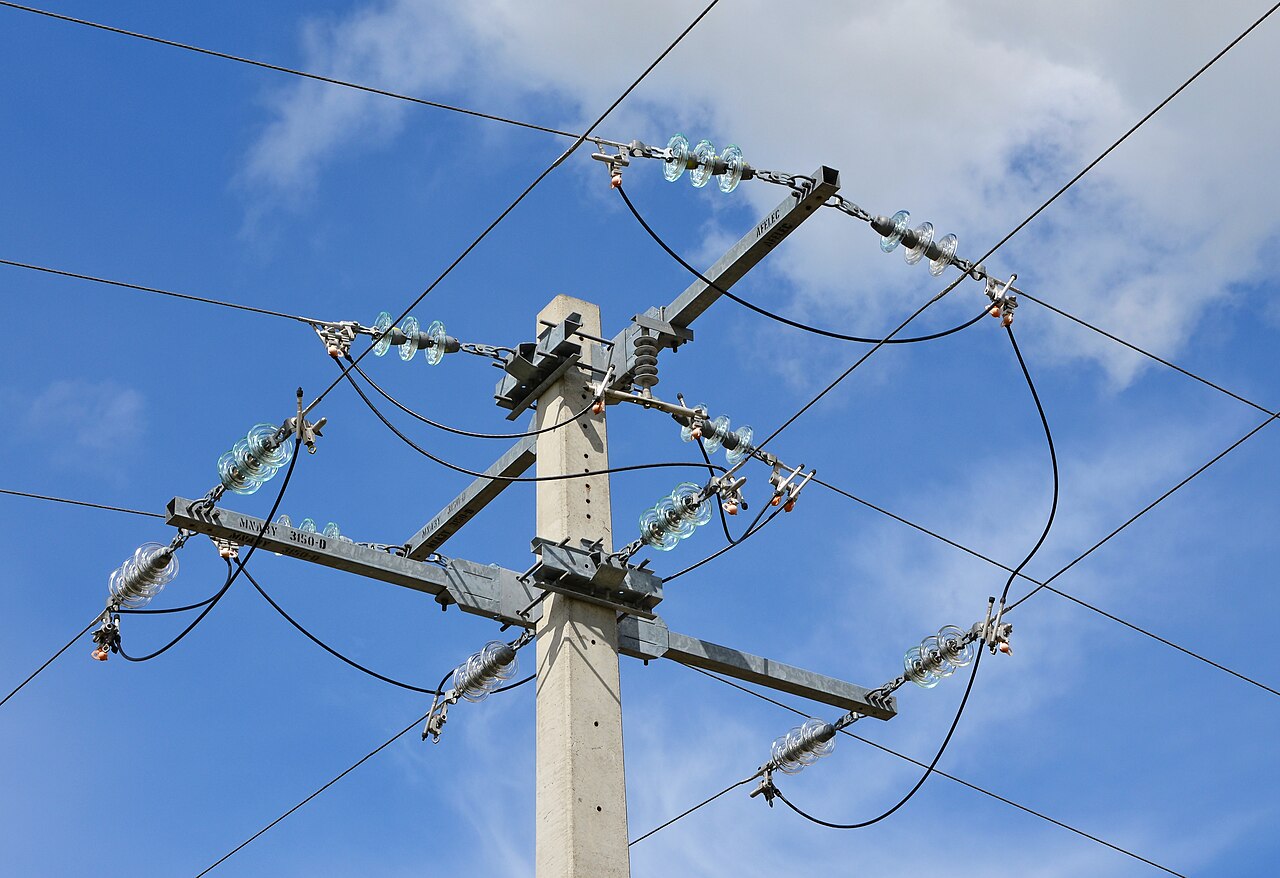
A household battery becomes a grid resource only when participation, dispatch and the household’s own needs can be coordinated reliably.
The power plant that does not share a fence
A conventional image of a power plant places the equipment behind a single fence. Rabot Energy’s proposed virtual power plant would be dispersed among households instead. The equipment would belong to different domestic routines, face different constraints and need to work together without making every resident an energy trader.
Rabot’s October 14 announcement says it has completed a Series B financing round. Lead investor Endeit identifies the round as $50 million in its October 15 statement, alongside participation from the DeepTech & Climate Fonds and existing investors. This is a closed financing announcement, not a proposed capital raise. The company says the next phase will expand its technology platform and work towards one million customers.
The strategy centres on connecting household batteries and coordinating them as a virtual power plant. Rabot also offers dynamic electricity tariffs and describes shifting consumption to periods when electricity is cheaper. Its Rabot Flow offering, introduced in June according to the issuer, combines a dynamic tariff, a smart meter and a plug-and-play battery. The October financing is the new event; that earlier product introduction is context, not a second launch being announced now.
A cheaper bill and a useful grid resource are not identical
There are two related but distinct propositions here. A household may want a lower bill. An electricity system may need demand and storage to respond at particular times. A useful commercial model has to reconcile those objectives rather than assume that they always point in the same direction.
Consider a hypothetical resident who expects to use stored energy later in the evening. An aggregated fleet might have a reason to discharge earlier, but doing so could leave that resident buying electricity when they had expected to rely on the battery. A dispatch system would need a clear account of the resident’s reserve requirement and the terms under which participation changes it. That example is a design question, not evidence that Rabot has caused such a conflict.
The distinction also matters when evaluating savings. Rabot makes claims about reduced household costs, but the financing announcement is not an independent trial of those claims. A careful comparison would need to establish the tariff, the household’s usage, the battery cost and the time period measured. A percentage without that denominator cannot tell a prospective participant what will happen in their own home.
Grid contribution should be measured separately. The ability to shift consumption in one household is not the same as a dependable capacity commitment across a large fleet. The aggregation becomes useful when the operator can say what flexibility is available, when it is available and how much uncertainty remains.
From a battery in one home to coordinated flexibility
Household needs
Establish what energy and reserve the household requires.
Available flexibility
Identify when charging or discharge can move without breaching those needs.
Coordinated action
Combine participating devices while preserving each household’s limits.
Measured result
Separate the household bill outcome from the wider grid contribution.
The domestic constraint is part of the software
The company’s appeal to renters and its description of a plug-in battery point towards a distribution strategy that does not require every customer to undertake a major home-energy project. That may lower one adoption barrier. It does not remove the need for intelligible installation guidance, consent and support when the device or connection behaves differently from expectations.
For the operator, household constraints are not peripheral customer-service details. They define the resource that can be coordinated. A device may be temporarily unavailable, a resident may change their preference or a connection may fail. A useful system would continue to make safe, understandable decisions without assuming every enrolled device will respond exactly as planned.
The commercial challenge is therefore closer to managing a distributed service than simply shipping hardware. Each additional household potentially adds useful flexibility, but also another relationship whose terms and exceptions must remain comprehensible. Growth that increases enrolled devices faster than dependable participation would not necessarily create an equally valuable virtual power plant.
What the new capital can and cannot establish
Rabot says the financing will support expansion and further development of its platform. Those are plausible uses for growth capital in a model that combines customer acquisition, energy products and software coordination. The completed round gives the company resources to pursue them; it does not certify the operational outcome.
The next evidence to look for is consequently specific. How much flexibility can be dispatched while preserving household commitments? How are results communicated to customers? What happens when a forecast or a device response is wrong? None of those questions can be answered by the size of a financing alone.
The attraction of the virtual-power-plant idea is that useful infrastructure might emerge from assets already distributed through ordinary life. Its constraint is the same fact. The plant has to respect the people and buildings in which its components operate. Rabot’s new round is a bet that this coordination can become a repeatable business, rather than a collection of attractive individual energy products.
Sources
- Rabot Energy: completed Series B announcement ↗ Rabot Energy: completed Series B announcement · Primary source
- Endeit: leading Rabot Energy’s $50 million Series B ↗ Endeit: leading Rabot Energy’s $50 million Series B · Primary source
Have additional information? Request a correction.


