The partnership creates an implementation test: can sensing, workflow records and staff responsibilities work together under real clinical constraints?
A partnership, not an outcomes paper
VitVio announced on October 14 that it is bringing Vetro, its AI-powered surgical operating system, to University Clinical Centre in Gdańsk. The company describes UCK as the first hospital in Poland to deploy the system. That first-in-country claim is attributed to VitVio, not independently established by a survey of Polish hospitals.
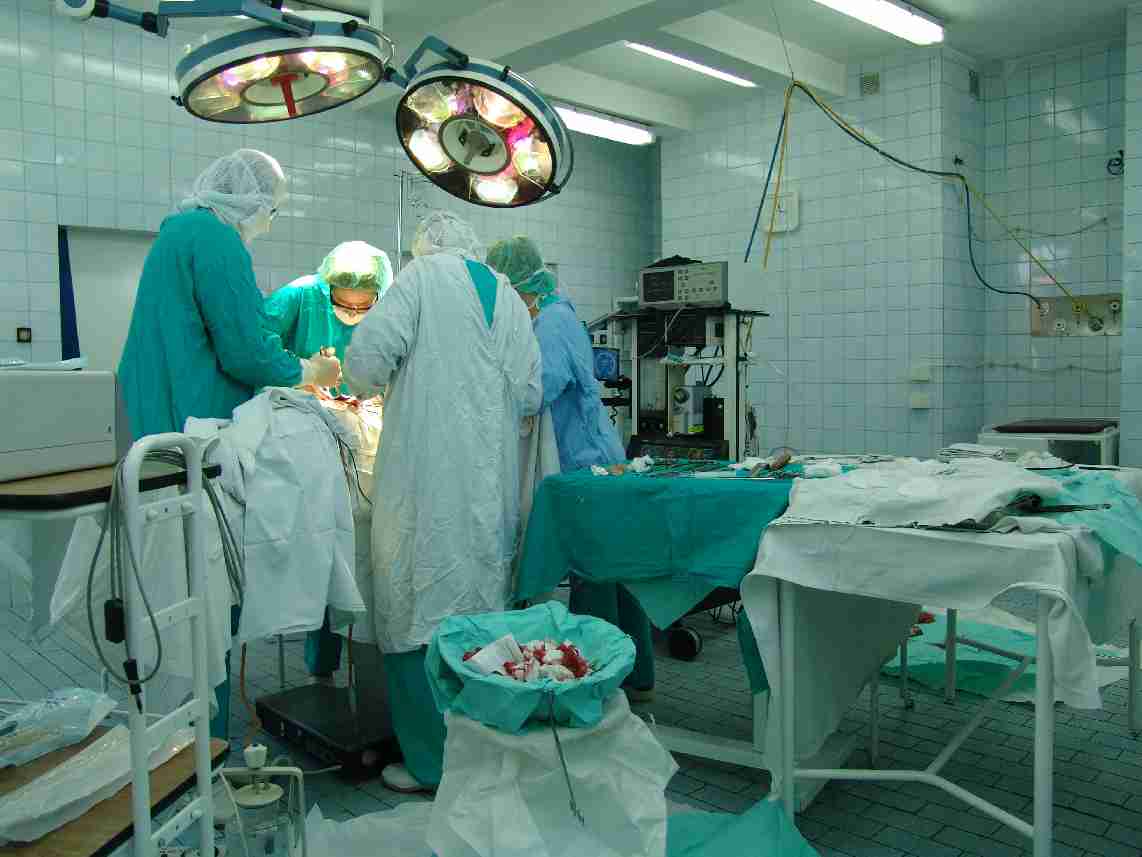
The release describes a partnership and rollout, including a multi-camera and ambient-sensing system that captures three-dimensional room data. It says the product is intended to support surgical workflows and reduce administrative burden. The announcement is evidence of the deployment plan, not a completed evaluation showing improved patient outcomes or a particular amount of time saved.
The operating room is not just a scene to recognise
A model can assign a label to an observed activity without understanding what a clinical team needs to do next. A useful hospital system must connect that label to responsibilities, records and exceptions. If the room’s activity differs from the expected sequence, the product needs a way to represent uncertainty rather than forcing the observation into a convenient category.
That matters because a workflow record is something people may act on. A team could use it to coordinate preparation, review a process or document what occurred. Each use has a different tolerance for mistakes. A proposed timestamp for retrospective review and an instruction affecting the next step should not inherit the same authority simply because they came from the same sensing system.
These are design considerations, not claims that Vetro makes those errors or issues such instructions. The announcement alone cannot answer them. A meaningful implementation review would specify which outputs are advisory, which need confirmation and how staff can correct a record.
From room sensing to an operational decision
Observe
Capture the room’s activity through the announced sensing system.
Interpret
Turn observations into proposed activity and workflow records.
Use and correct
Make records useful to authorised staff and provide a way to challenge errors.
Teaching adds another audience
VitVio frames the partnership in the context of a teaching hospital. That creates a potentially useful second purpose for activity records: helping authorised staff understand how a process unfolded. A record can make a sequence easier to discuss without turning the recording itself into a judgement of a clinician’s competence.
The distinction is important. Training, scheduling and performance assessment are not the same use, and a tool introduced for one purpose should not silently acquire another. Hospital teams would need clear policies about who can access the output, why they are using it and what conclusions the evidence supports.
The company’s claimed reduction in administrative work also needs to be assessed at the workflow level. A system might remove one documentation task while adding verification or correction elsewhere. A sound comparison would account for both sides, rather than treating the absence of a manual entry as proof of a net saving.
Privacy claims need an operational description
VitVio says Vetro is designed to understand a room without identifying the people in it. The release says identifiable data is removed in real time and that the system does not create biometric templates such as face or voice templates. These are company descriptions of the design, not an independent privacy audit.
A prospective user should ask what data is captured, what is retained and who can retrieve it. Those questions remain useful even when a system does not create the particular identifiers named in a release. Retention, access controls and secondary uses can matter independently of whether a face template exists.
A review should also describe how the product handles mistakes in removing information or interpreting activity. Privacy and usefulness are not opposing slogans; they are properties that need to be specified for the actual installation, including its support and correction procedures.
The hospital will supply the harder test
The immediate news is a named hospital partnership and an announced Polish rollout. It is not a funding close, a regulatory clearance for every possible use or proof that the product has achieved all its advertised benefits. Keeping those categories separate makes the deployment easier to follow.
The most informative next evidence would describe the installed scope, the tasks staff actually use and the results of a defined evaluation. A useful report would include exceptions and correction work, not only a demonstration in which the sequence is predictable. That would help readers understand how the system fits a clinical environment rather than how it performs in a product presentation.
For VitVio, moving into a teaching hospital creates an opportunity to demonstrate that fit. The interesting result would be a dependable, appropriately bounded layer of operational information. The cameras and model are components; the service becomes valuable only when the people working in the room can use its output responsibly.
Sources
- VitVio: UCK Gdańsk partnership announcement ↗ VitVio: UCK Gdańsk partnership announcement · 2026-10-14 · Primary source
- Tech.eu: VitVio Poland partnership ↗ Tech.eu: VitVio Poland partnership · 2026-10-14
Have additional information? Request a correction.