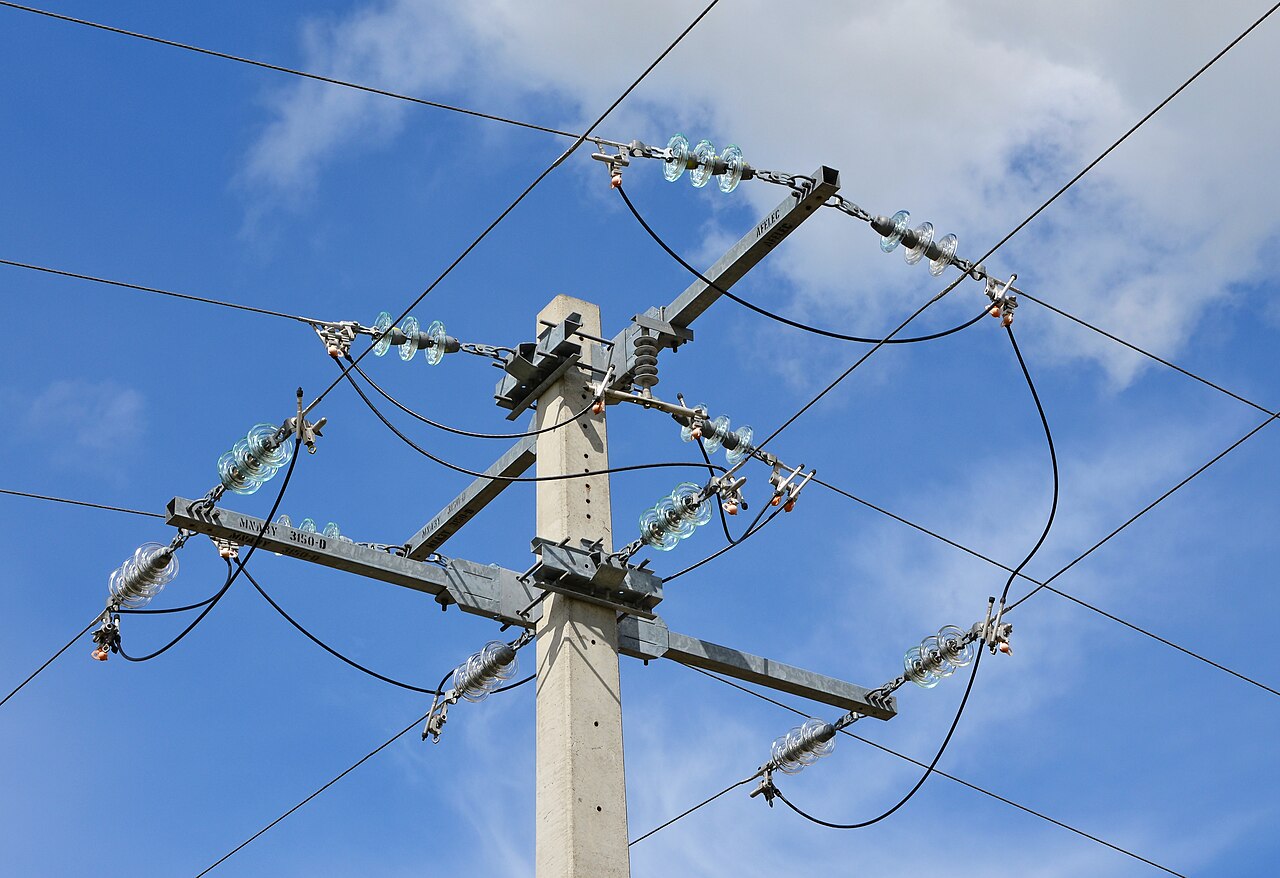
An inspection platform earns its value when trustworthy findings reach maintenance teams, not simply when an aircraft records more kilometres.
October 12: the closed financing
An inspection aircraft has two jobs in this analysis: collect a usable observation, and leave behind something a maintenance team can act on. Buying more aircraft addresses only part of that chain. HyLight’s new financing makes the connection between its fleet and its software the more interesting question than the airship’s unusual shape.
HyLight closed a €13 million financing round, according to its company announcement distributed through pressetext on October 12. The release names Rubio Impact Ventures, DRW and Teampact Ventures, alongside returning investors Y Combinator and Ring Capital. October 12 is the original announcement date, not the date of subsequent coverage.
The French company says it builds and operates hydrogen-powered airships for infrastructure inspection and develops the accompanying data-analysis software. It reports four aircraft today and a target of operating up to 15 simultaneously in 2027. The round is closed; that larger fleet is a future goal. Foundra has not observed the flights, audited operating performance or verified the company’s comparative claims about competing inspection methods.
Our reading is that this is an integrated operating business, not simply an aircraft sale. The distinction matters because the physical and digital parts have to work together: a useful sensor reading still needs a place in the customer’s maintenance workflow. The funding announcement establishes access to capital, not proof that the whole service can scale economically.
2027: a target 3.75 times the current count
Fifteen divided by four is 3.75. That comparison uses the proposed simultaneous fleet and the company’s reported current aircraft count. It does not show a 3.75-fold increase in revenue, kilometres inspected or productivity. Those outcomes would require additional evidence about deployment, utilisation, customer demand and the work each mission produces.
Consider a hypothetical operating day in which an aircraft is available but the planned inspection cannot proceed. The fleet count has not changed; the usable output has. This is not a report of a HyLight incident. It illustrates why a capacity target and delivered service should remain separate in any assessment of the expansion.
A useful evaluation would follow missions through successive stages: planned, flown, producing usable observations, and accepted into a maintenance process. That is an editorial framework, not a dashboard the company has disclosed. It would help distinguish a shortage of aircraft from a bottleneck in scheduling, interpretation or customer acceptance. Resolving one would not automatically resolve the others.
There is a similar distinction on the financial side. More available aircraft might allow more work, but profitability cannot be calculated from the fleet ratio. Readers would need evidence about the cost of delivering that work and what customers pay for it. The announcement does not establish an independently audited unit-economics result, and we do not infer one from the financing amount.
For now, the defensible timeline is narrow: financing secured in October 2026, a larger simultaneous fleet sought in 2027. The question to carry forward is whether the expansion produces a repeatable service, not whether a planned fleet should be counted as an accomplished milestone.
How an inspection could become a maintenance decision
Collect
Capture data for a defined asset and inspection objective.
Locate
Connect a suspected issue to the correct asset and position.
Assess
Review evidence and assign a justified priority.
Act
Send the approved finding into the operator’s maintenance process.
The maintenance record at the other end
Imagine a maintenance team receiving an observation that appears to show a problem on a line. Before treating it as a work order, the team would need to identify the asset, locate the observation and examine the underlying evidence. This example describes an actionable record; it is not a reproduction of HyLight’s customer reports or a claim about a particular customer’s procedures.
The same record should preserve uncertainty. No usable view and no detected issue are different conclusions. A hypothetical service that combines them into one clean-looking result could make its coverage appear more complete than the evidence supports. Reporting the missing observation separately would make the limitation visible without inventing a defect.
Repeated inspections introduce another useful question: are two observations genuinely comparable? An analytical comparison should consider whether they refer to the same asset and whether the underlying evidence supports a change. A larger collection of images is not, by itself, proof of deterioration or improvement. These are proposed evaluation questions, not claims that HyLight has failed a test.
The retained explanatory visual maps a proposed route from collecting an observation to locating, assessing and acting on a finding. It is a conceptual maintenance workflow, not a disclosed HyLight operating process. The cover is also explicitly contextual: French power infrastructure photographed in 2013, not a HyLight flight or an asset the company has inspected. Neither visual supplies evidence of operating performance.
HyLight’s capital gives it room to pursue a larger operation. The more consequential result would be a dependable connection between the observation made in the air and a decision made on the ground. That is the standard this analysis proposes for following the expansion, while leaving its eventual performance open.
Sources
- HyLight closes €13 million financing for autonomous inspection airships ↗ HyLight via pressetext · 2026-10-12 · Primary source
Have additional information? Request a correction.
Updates & corrections
October 13, 2026: 13 October 2026: Expanded the analysis of the reported fleet target, service economics and maintenance-data uncertainty. The October 12 announcement date and distinction between closed funding and planned capacity are unchanged.