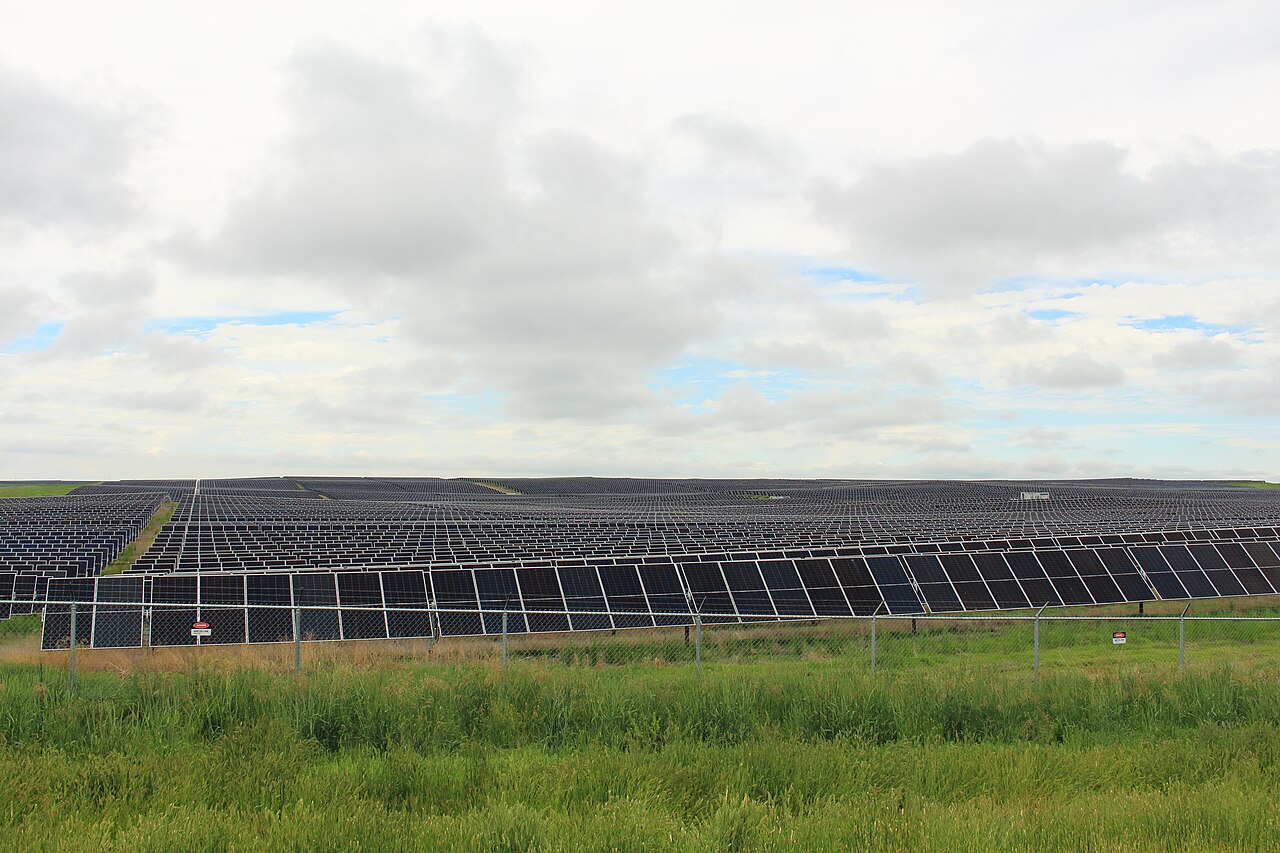
An energy optimiser must respect comfort, readiness and customer permissions as well as price signals.
1KOMMA5° is putting a software layer over the electrified home
Solar panels, batteries and electric heating can be purchased as separate pieces of equipment. The more ambitious business is to make them behave like a coordinated system. That is where energy management software enters the home—and where its economics become more complicated than the familiar promise of a cheaper electricity bill.
Reuters reported on October 12 that 1KOMMA5° reached a $1.35 billion valuation in its latest financing round and plans to invest more than €100 million in its Heartbeat energy AI business in 2027. Tech.eu also covered the development. The company is considering US expansion and a possible future US listing; neither is presented here as completed. The valuation is not the amount of fresh capital raised, and the investment figure is a future spending plan.
Those distinctions leave a specific strategic story: the company wants to deepen the software coordinating its home-electrification offering. The challenge is to turn technically flexible equipment into a service households can understand and rely on.
A household has a life to run
An optimiser can calculate a financially attractive schedule that a household dislikes. A battery may be valuable to the electricity system at a particular hour, while its owner prefers to retain a reserve. Heating can sometimes be shifted, but comfort is not a variable customers necessarily want to trade away. A car must be ready when its driver needs it, not merely when a tariff makes charging convenient.
These examples illustrate the product problem rather than any documented Heartbeat failure. The software needs to respect constraints that are sometimes explicit and sometimes discovered through use. An apparent saving loses much of its value if the owner repeatedly overrides the system or stops trusting it.
That makes the interface commercially important. Customers need a clear account of what the system can control, what they have authorised and how to change their preferences. An explanation that is adequate for an engineer may be inadequate for someone trying to understand a bill or prepare for a morning journey.
A good comparison would also use an appropriate baseline. Savings measured against an unsuitable tariff or an unusually poor operating schedule can look impressive without representing a typical improvement. Weather, household consumption, equipment costs and contract terms all affect the outcome. No universal saving can be established from the financing announcement.
Three different numbers, three different meanings
Valuation
$1.35 billion is the reported company valuation, not the amount raised.
Planned spending
More than €100 million of Heartbeat investment is planned for 2027, not reported completed expenditure.
Customer value
Household savings require a suitable baseline, full costs and actual contract terms.
Coordination creates both value and responsibility
The appeal of connecting many devices is that their combined flexibility may be more useful than any one device alone. Yet that creates another layer of responsibility: the service must keep track of permissions, availability and the commitments it makes outside the home.
A hypothetical household might authorise limited battery use while reserving capacity for its own needs. The software must preserve that boundary when conditions change. If a device becomes unavailable, the service needs a sensible fallback. An attractive optimisation on an idealised schedule is not enough; the operating system must cope with ordinary interruptions.
Hardware diversity adds friction. Devices can differ in how they communicate, what they expose to software and what their warranties permit. A system built around a coordinated installation may have advantages over one trying to support every possible combination. The trade-off is the customer's freedom to replace or add equipment later.
The business model must explain who receives the value created. Some benefit may appear in the customer's bill, some in payments for flexibility and some in the provider's fees. Without a clear allocation, a technically successful service can still leave customers unsure whether they are better off.
Who gets paid for flexibility?
A coordinated home can create value in more than one place, and confusing those places makes a subscription difficult to assess. A lower household bill, a payment connected to electricity-system flexibility and a provider's fee are separate flows. A customer may care about their net position, while a provider has to keep its own economics viable.
An illustrative contract could promise a household a particular share of value after specified costs. Another might offer a simpler fixed benefit while the provider carries more of the variability. Neither structure is inherently better in every case. The comparison depends on what risks each side assumes and how clearly the calculation can be checked. These are hypothetical structures, not reported Heartbeat contract terms.
The duration of the relationship matters too. Equipment can remain in a home longer than a software subscription. Customers need to know what the equipment can still do if they change service providers or stop paying for a particular optimisation layer. Convenience at installation can become dependence later if those boundaries are obscure.
That makes explainability more than a technical feature. A household should be able to understand a consequential decision in the language of its own priorities: comfort, readiness, reserves and cost. If the financial benefit requires trust in an opaque calculation that cannot be reconciled with a bill, the provider has a customer-service problem as well as a software problem.
The expansion test is local
Entering another country is not simply translating an app. Electricity-market arrangements, tariffs, installation practices and customer expectations can change the proposition. A model that works in one setting may need substantial adaptation elsewhere. A contemplated US expansion should therefore be assessed through concrete market choices and operating arrangements when they are announced.
The planned investment could help develop the software and organisation needed for that work. It remains a plan for 2027, rather than evidence of spending already completed or revenue already earned from new markets.
The useful measure of progress will be whether connected households receive a service that is dependable, understandable and economically worthwhile after all costs. 1KOMMA5°'s financing story points toward that service layer. The valuation attracts attention; the relationship between the software's decisions and the household's everyday experience will determine whether the proposition endures.
Sources
- German startup 1Komma5Grad secures $1.35 billion valuation in new financing round ↗ Reuters via MarketScreener · 2026-10-12 · Primary source
- 1KOMMA5° reaches $1.35B valuation, plans €100M investment in energy AI ↗ Tech.eu · 2026-10-12
Have additional information? Request a correction.